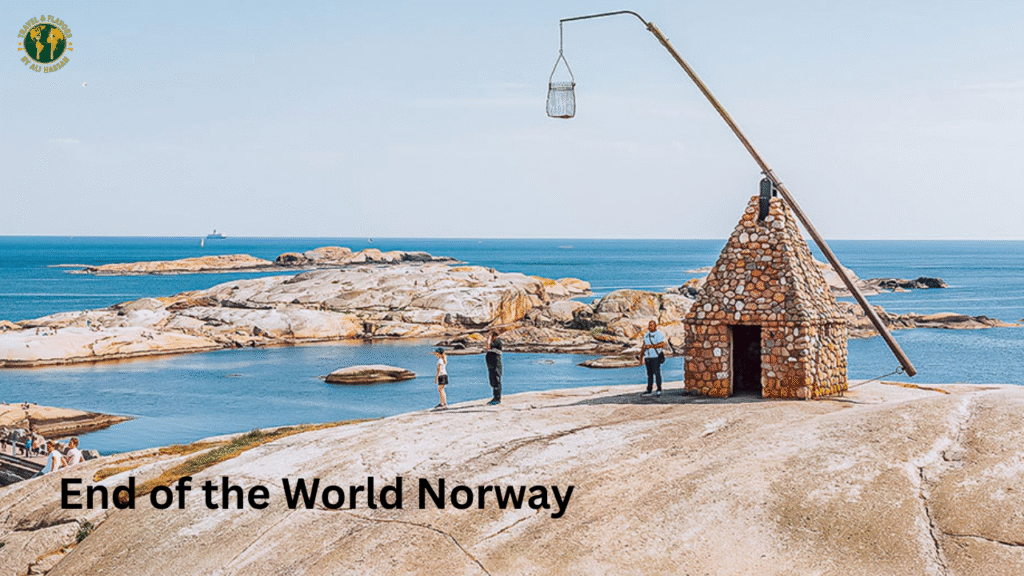

Introduction: Where the World Feels Like It Ends—and You Begin
I still remember the moment I first heard locals describe the remote Arctic cliffs of Northern Norway as Verdens Ende—“The End of the World.” The phrase tugged at my curiosity instantly. I’ve explored dramatic landscapes around the world, but nothing truly prepared me for the moment I stood at the edge of the Norwegian Sea. The wind rose in powerful, almost ancient gusts, and the horizon unfolded into a blue infinity that made me feel both grounded and completely awed by nature’s scale.
When I finally made it to End of the World Norway, the name felt perfectly right. The landscape wasn’t just beautiful—it was transformative. It was the kind of place where you arrive as one person and leave as another. The silence, the scale, the otherworldly light… everything pushes you inward, urging you to reflect, breathe, and simply feel.
In this guide, I’ll share my personal journey to Norway’s far edge, weaving it with research, travel insights, and comparisons that will help you plan your own visit to one of Earth’s most soul-stirring destinations.
Before you start you journey read official guide to Norway.
What Exactly Is “End of the World Norway”?
The phrase often refers to remote northern points such as:
- Nordkapp (North Cape) – A dramatic cliff 307 meters above the Arctic Ocean, often marketed as the northernmost accessible point in Europe.
- Vardø & Hornøya – Windswept Arctic towns surrounded by seabird colonies and polar light.
- Hamnøy & Reine in Lofoten – Where razor-sharp mountains drop straight into icy blue fjords.
- Vesterålen and Senja are rugged, time-carved islands that offer untouched landscapes and peaceful solitude for travelers hoping to avoid the crowds.
Even official tourism boards acknowledge the region’s awe-inspiring remoteness, with Visit Norway highlighting its “endless horizons and nature that commands respect.”
When I traveled through these northern edges, each place offered a different kind of emotional pull—some calming, some overwhelming, some haunting.
Read the Guide on: 10 Best Countries to Visit in Winters – Where Magic Meets Snow
My Journey to the Edge: A Story of Light, Silence, and Transformation
The Road to Nordkapp: Where the World Turns Arctic
Driving toward Nordkapp felt like slowly leaving civilization behind. The houses became sparse, the trees disappeared, and the roads narrowed into winding strips that cut through snowy plateaus. At one point, I realized I hadn’t seen another human being for half an hour—and strangely, that isolation brought peace instead of fear.
When I stepped out at the Nordkapp Plateau, a powerful wind nearly knocked me back. The sky glowed with Arctic blue light, and the ocean stretched so far that it felt like the earth simply… stopped.
I stood there for a long time—longer than I’d planned—because something about that place asks you to pause your life. I remember feeling incredibly small yet deeply alive, as if nature whispered, You belong to something bigger.
Vardø: A Town That Lives with the Arctic Winds
Vardø wasn’t just remote; it felt like a frontier. The colorful wooden houses contrasted against the harsh Arctic wind that never seems to stop blowing. I visited the Vardøhus Fortress and walked through empty streets where the silence felt almost sacred.
That night, I witnessed one of the strongest displays of the Northern Lights I had ever seen—green curtains swirling above a frozen harbor. It felt surreal, like the sky itself was performing just for the handful of us who dared to live or travel this far north.
Hamnøy: A Place So Beautiful It Feels Unreal
When traveling through Lofoten, Hamnøy was my emotional peak. Standing on the famous red cabins facing the jagged peaks, I felt a sense of belonging that’s rare when you travel.
The air smelled like salt and snow. The water was so calm that it reflected the mountains with almost mirror-like clarity. I took a deep breath—and for the first time in years, I felt my mind go quiet.
If there was ever a moment I wanted to freeze and live inside forever, it was that morning in Hamnøy.
How End of the World Norway Compares to Other Remote Feelings
| Location | What You Feel | Atmosphere | Best For |
|---|---|---|---|
| End of the World Norway | Awe, introspection, emotional clarity | Arctic, dramatic, silent | Solo travelers, photographers, reflection trips |
| Iceland’s Westfjords | Isolation mixed with rugged wilderness | Raw, volcanic, windy | Adventurers, road trippers |
| Patagonia (Chile/Argentina) | Overwhelming sense of scale | Mountainous, wild, unpredictable | Hikers, nature lovers |
| Faroe Islands | Fairy-tale solitude | Misty, green, mysterious | Culture seekers, slow travelers |
Among all these, Norway’s north felt most soul-stirring—not because it’s the most remote, but because it’s the most emotionally intense.
Also Read: Things to Do in South Africa That Will Steal Your Heart.
Key Insights: What Makes “End of the World Norway” Truly Life-Changing
1. The Light Feels Supernatural
Depending on when you go, you’ll witness:
- Midnight Sun (May–July) – A surreal golden glow that lasts all night.
- Polar Night (Dec–Jan) – A deep blue twilight that turns landscapes into art.
- Aurora Borealis (Sept–March) – The sky dancing in greens, purples, and blues.
No lighting situation in the world shifts your mood and thoughts like Arctic light. It’s a natural therapy session.
2. The Silence Rewires Your Mind
In cities, we underestimate how noise shapes us. But in Norway’s far north, silence is vast and alive. I felt my thoughts reorganize, my stress fade, and my breathing deepen.
3. The Culture Lives with Nature, Not Against It
Sami traditions, Arctic fisheries, and coastal living show you what it means to survive—and thrive—in a place ruled by the elements.
4. The Journey Feels Like an Achievement
Whether you’re driving through snow, taking ferries between islands, or hiking on cliff edges, the experience feels earned.
5. You Leave with a Different Perspective
The Arctic teaches you patience, humility, and presence. It dissolves ego. It widens your sense of time. And somehow, it reminds you what truly matters.
How to Prepare for Your Own End of the World Norway Journey
Best Time to Visit
- Summer (June–August): Midnight sun, mild weather, long hikes.
- Winter (November–March): Northern lights, snow landscapes, Arctic adventures.
What to Pack
- Layered thermal clothing
- Windproof jacket
- Waterproof boots
- Camera with extra batteries
- Snacks for long drives
- Emergency winter gear (if visiting off-season)
How to Get There
- Fly into Tromsø, Alta, or Kirkenes
- Rent a car for maximum freedom
- Use ferries between islands
- For Nordkapp: E69 highway (open with convoy in winter)
Where to Stay
- Hamnøy Rorbuer – Iconic red cabins
- Nordkapp Visitor’s Lodge – Closest to the plateau
- Vardø hotels – For Arctic culture
- Senja Arctic Cabins – For serene nature escapes
Conclusion: When a Place Stays With You Forever
Travel changes you—but some places transform you on a deeper level. End of the World Norway is one of those rare destinations that reaches places inside you that everyday life can’t touch. When I left, I felt lighter, calmer, and strangely more myself.
The Arctic winds will shake you awake. In the stillness, silence begins to reset your mind. And as the endless horizon unfolds, it gently reminds you that your story is just one part of a much bigger, beautiful world.
Your Next Action
If this journey speaks to your soul, share your thoughts below—I’d love to hear your experiences or dreams about exploring the Arctic.
You can also explore more destination stories on Travel and Flavours, or subscribe for weekly travel guides, hidden gems, and food adventures that inspire your next journey.
Subscribe our Newsletter!