
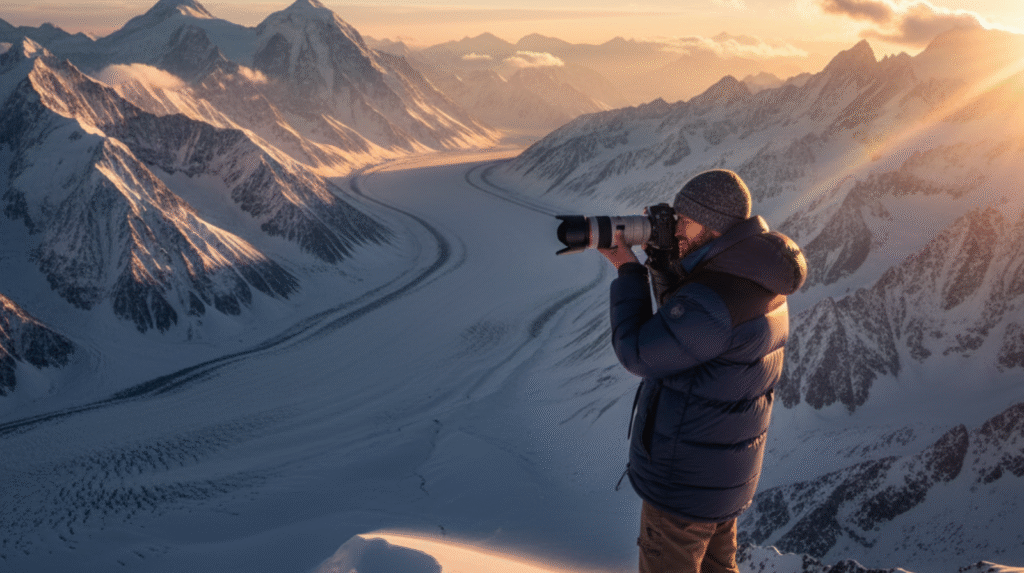

For most, the thought of winter travel conjures images of cozy European Christmas markets or tropical escapes. But for those in the know, there exists a secret, a place where winter doesn’t just arrive; it performs a breathtaking, silent opera of ice and stone. This is Northern Pakistan in winter—a realm of stark, majestic beauty, profound cultural warmth, and culinary delights that simmer with tradition.
Forget the crowded summer trails. Winter here is for the soulful traveler, the one who seeks not just sights, but experiences. It’s a season that strips the landscape to its powerful essence and reveals the true heart of its people.
Why Northern Pakistan in Winter is Special
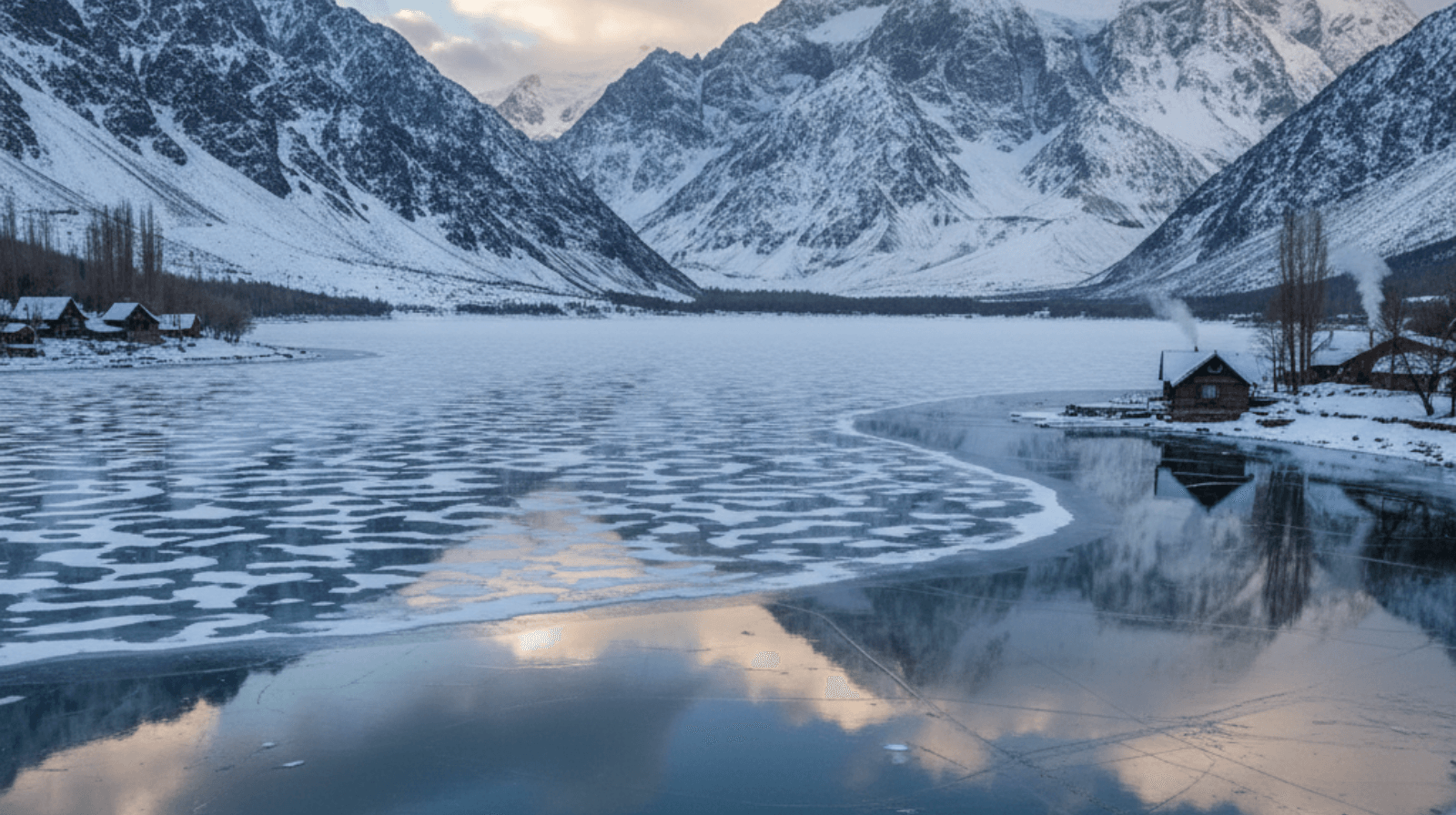
Northern Pakistan transforms into a magical realm during the colder months. The snow-draped peaks, frozen rivers, and welcoming culture make it a destination unlike any other in the world.
A Landscape Painted in Frost and Majesty
Imagine a world where the mighty Karakoram and Himalayan giants, usually brown and rugged, are draped in robes of pristine white. The air is crisp, thin, and incredibly pure, each breath a refreshing shock to the system. The summer greens of the valleys have surrendered to a deep, silent hush, broken only by the crunch of snow underfoot and the distant melody of a frozen river flowing beneath sheets of ice.
This is not a barren stillness; it’s a profound peace. The famous blue of Attabad Lake takes on a darker, more dramatic hue, framed by snow-dusted peaks that reflect perfectly in its frigid, mirror-like surface. Waterfalls, like the iconic ones in Swat, become magnificent frozen sculptures, capturing a moment in time with crystalline beauty.
The Winter Jewels of the North
While each region offers its own unique charm, a few spots transform into something truly ethereal during the colder months.
Hunza Valley – The Kingdom of Silence
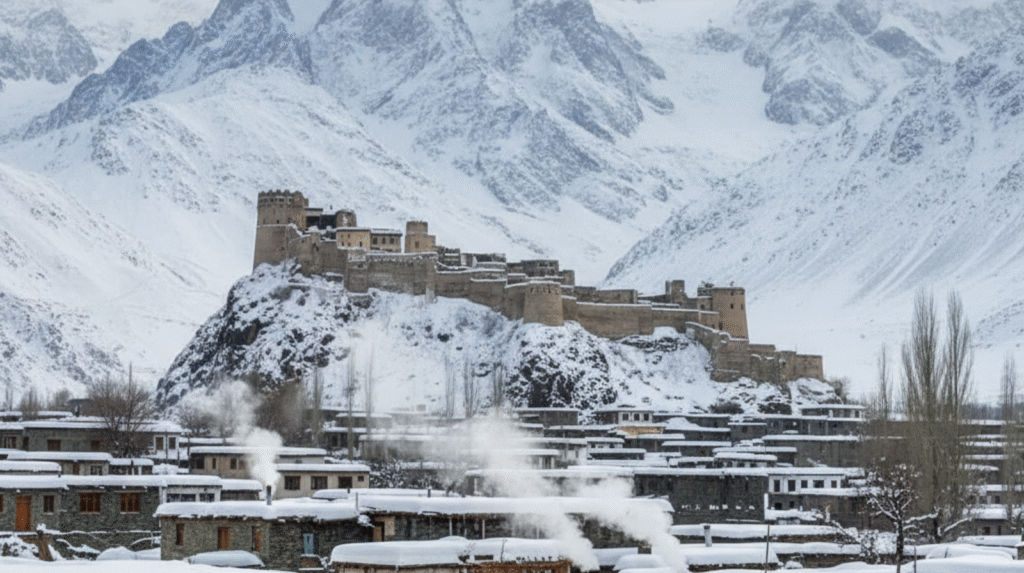
In winter, Hunza Valley transcends into a silent kingdom. The iconic Rakaposhi and Ultar Sar peaks stand guard over the valley, their peaks sharper against the deep blue winter sky. A visit to the ancient Baltit and Altit Forts is even more evocative with a dusting of snow, feeling like a step back through centuries of history. The hospitality here is legendary; don’t be surprised if you’re invited into a local home simply for sharing a smile.
Skardu – The Gateway to Giants
As the gateway to the world’s highest peaks, including K2, Skardu becomes a basecamp for a different kind of adventure. The journey itself on the Karakoram Highway is part of the experience, with vistas of frozen waterfalls and snow-covered cliffs. Shangrila Resort and Lower Kachura Lake are serene and crowd-free, offering a tranquil escape. This is the heart of Baltistan, with a rich culture and incredibly resilient people.
Swat Valley – The Switzerland of the East
Swat Valley dons a magical cloak in winter. Malam Jabba, home to Pakistan’s premier ski resort, comes alive with the laughter of skiers and snowboarders. The town of Kalam and Mahodand Lake, often inaccessible, become pristine, untouched wonderlands for the most intrepid travelers, rewarding them with scenes of unparalleled beauty.
Murree and Nathia Gali – The Colonial Retreat
Closer to Islamabad, the hills of Murree and Nathia Gali offer a more accessible winter fantasy. The famous Mall Road in Murree, with its colonial-era architecture, twinkles under strings of lights and a blanket of snow. It’s a nostalgic trip for Pakistanis and a charming, cozy experience for visitors, complete with horse rides, hot corn, and the scent of woodsmoke in the air.
The Culinary Hearth – Traditional Winter Foods
The cold weather demands food that nourishes the soul, and the people of the north are masters of winter cuisine. This is where your journey truly warms up.
Chapshuro – The Hunza Winter Delight
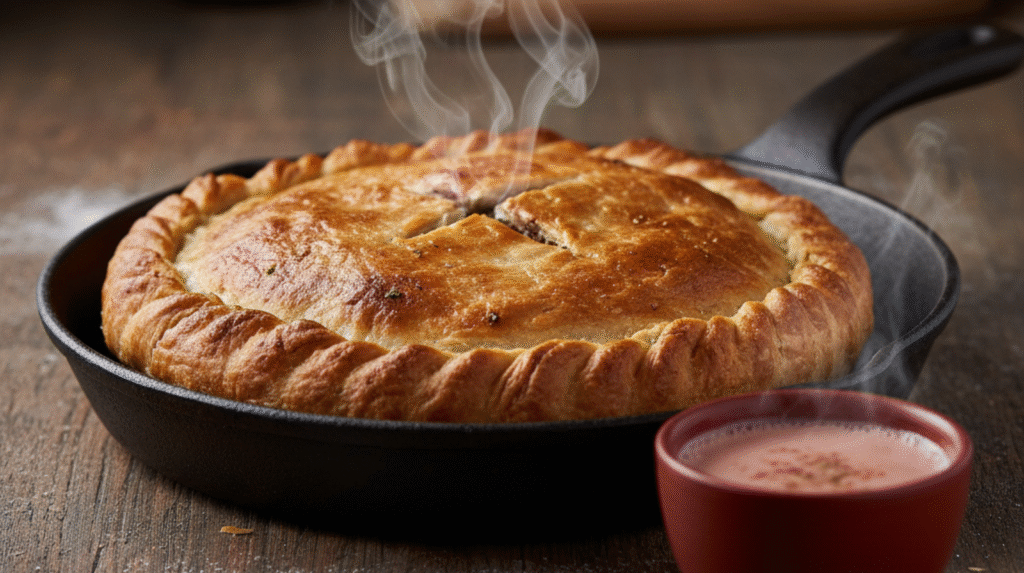
The undisputed king of winter food. Imagine a hearty, half-moon-shaped pie stuffed with finely minced yak or mutton, onions, and a blend of local spices, then baked to perfection on a skillet. Each bite is a burst of flavorful, warming goodness, best enjoyed with a view of the mountains.
Yak Meat Dishes and Butter Tea
A unique specialty of the high altitudes. Yak meat is lean, rich, and incredibly flavorful. You’ll find it in stews, grilled as kebabs, or even in a traditional dish called Yak Namkin Chai (salty yak butter tea), a creamy, savory drink that provides immense energy against the cold.
Soups and Stews for Cold Evenings
Bowls of steaming hot soup are a daily staple. Lentil soup (Daal), and a local favorite, Shingho (a flavorful mutton broth), are simmered for hours with ginger, garlic, and coriander, healing you from the inside out.
Dry Fruits – Nature’s Energy Pack
Follow the local lead and carry a pocket mix of walnuts, almonds, and apricot kernels—a nutritious and energy-boosting snack. The famous Hunza apricots, dried in the summer sun, are a sweet treat year-round.
Tea Culture – Kahwa, Doodh Patti & More
Every social interaction begins with an offer of tea. From the simple, strong Doodh Patti (all-milk tea) to the sophisticated Kahwa—a fragrant green tea infused with saffron, cardamom, and almonds—each cup is a ritual of warmth and connection.
The True Warmth – Hospitality of the North
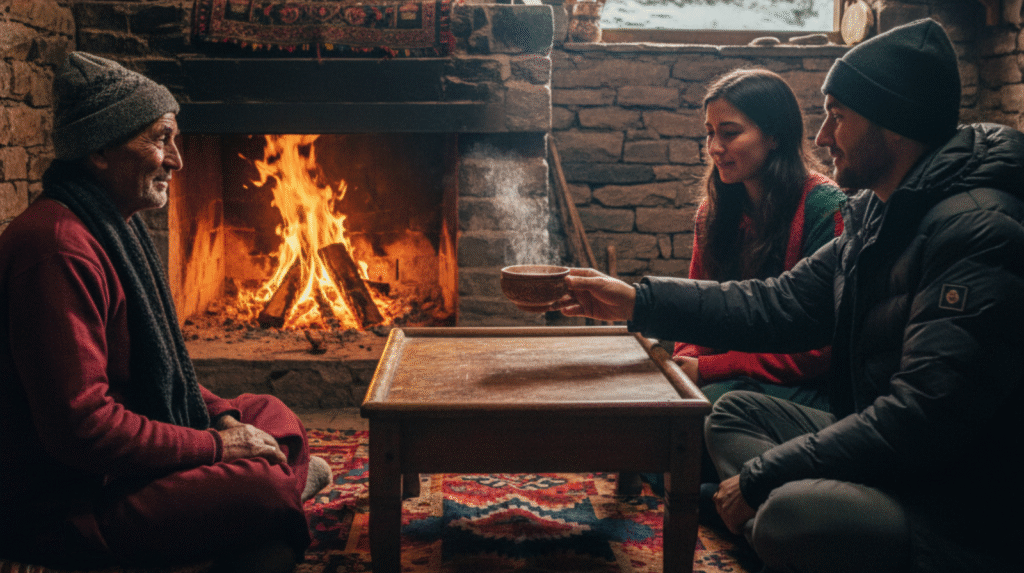
Beyond the landscapes and the food, the most enduring memory you will take from a winter in the north is the profound warmth of its people. Hospitality here is not an industry; it is a centuries-old code of honor. In the quiet of winter, this generosity shines brightest.
You might be invited into a Balti home in Skardu to share a meal by the stove, or a Wakhi family in Hunza might offer you a blanket and a story. The smiles are genuine, the handshakes firm, and the desire to ensure a stranger is safe and warm is deeply ingrained. This human connection, set against the backdrop of a frozen, majestic world, is the most magical experience of all.
A Journey for the Soul
Travelling to Northern Pakistan in winter is more than a vacation. It’s for those who find beauty in silence, strength in mountains, and warmth not just from a fire, but from the unparalleled hospitality of the people who call this frozen paradise home. So, pack your warmest clothes, an open heart, and an adventurous spirit. An unforgettable winter’s tale awaits.
Travel Tips for Winter Trips to Northern Pakistan
- Pack Properly: Warm clothing, snow boots, gloves, and jackets are essential.
- Plan Transport: Some roads may be blocked due to heavy snowfall, so always check updates before traveling.
- Stay in Local Guesthouses: They offer cozy stays and a chance to enjoy authentic culture.
- Try Local Food: Don’t miss Chapshuro, Yak meat, and butter tea for a true northern experience.
- Respect Local Traditions: The north is rich in culture—respect customs, dress modestly, and interact politely with locals.
Why Visit Northern Pakistan in Winter?
Northern Pakistan is not just about landscapes; it is about experiences. Winter here gives you a chance to slow down, connect with nature, and immerse yourself in a culture that values hospitality. From the snowy peaks of Hunza to the lively bazaars of Swat, every corner of the north has a story to tell. And when combined with hearty winter foods, the journey becomes unforgettable.
FAQs About Winter Travel in the North
1. Is it safe to travel to Northern Pakistan in winter?
Yes, it is safe, but travelers should check weather conditions and road closures before planning their trip.
2. What is the best time to visit for snowfall?
December to February is the peak winter season for snowfall in Hunza, Skardu, Murree, and Swat.
3. Can families travel easily in winter?
Yes. Destinations like Murree and Swat are family-friendly, while Hunza and Skardu are better suited for adventurous travelers.
4. What should I eat when visiting the north in winter?
Try Chapshuro, Yak meat, soups, dry fruits, and butter tea for the most authentic experience.
Conclusion – A Winter Dream
Visiting Northern Pakistan in winter is like stepping into a magical world. The snowy landscapes, warm hospitality, and rich food culture create memories that last a lifetime. Whether you are a solo traveler seeking peace, a family looking for fun in the snow, or a foodie eager to taste new flavors, the north welcomes you with open arms.
So pack your warm clothes, prepare your camera, and get ready to discover the winter charm of Northern Pakistan.