
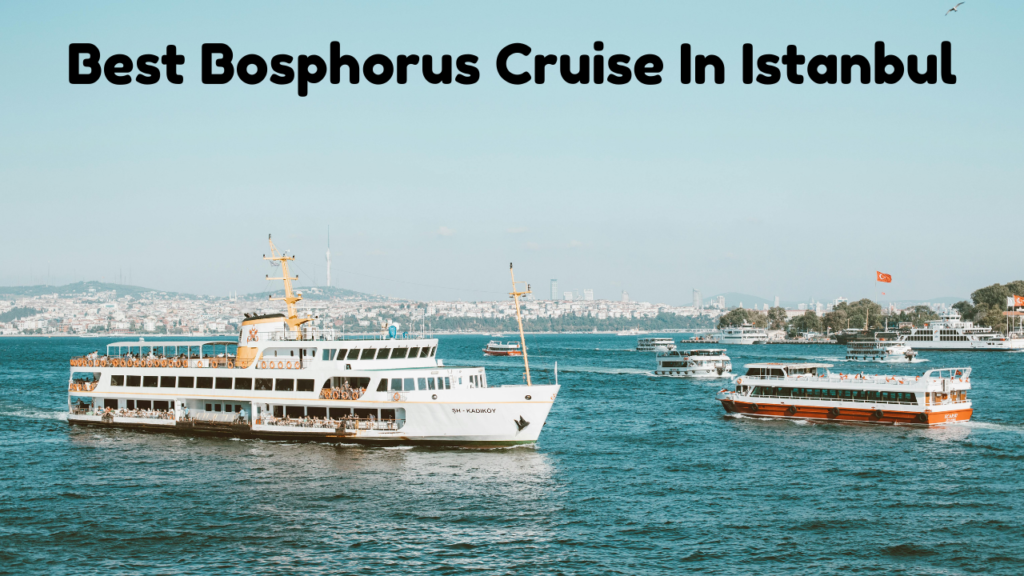

Three days into my first Istanbul trip, a man at a rooftop bar told me the Bosphorus cruise was a tourist trap. “Just take the public ferry,” he said, with the kind of confidence that comes from never having been wrong in his own head.
I listened. I took the public ferry. It was fine.
Then, on my second visit, a friend who had lived in Istanbul for two years took me aside and said, “You did not take the sunset cruise, did you?” I told her about the public ferry. She looked at me the way people look at someone who went to Paris and spent three days in McDonald’s.
So I went back. Took the sunset cruise. Then on the third trip I took the long northern route. On the fourth, curious about the hype, I did the dinner cruise — mostly to confirm my suspicions, which were correct.
I am writing this because every best Bosphorus cruise Istanbul guide I found before my first trip was either a hotel-sponsored list of “top experiences” or a one-paragraph summary written by someone who clearly took one cruise in 2019 and called it a day. None of them told me what actually changes between options, or what that choice feels like in practice.
This one does.
Before we talk about which cruise — here is why the Bosphorus matters at all
Istanbul is one of those cities that takes a few days to land properly. On the first day you are overwhelmed by Hagia Sophia and the crowds around Sultanahmet. Neighborhoods start making sense by day two. And somewhere around the third day, if you are paying attention, something strange becomes obvious.
The city does not feel like it has a center.
That is because it does not — not in the conventional sense. Istanbul is built across two continents, with the Bosphorus Strait running through the middle. Roughly 700 meters wide at its narrowest, it connects the Black Sea to the Sea of Marmara. For the better part of two thousand years, controlling this waterway meant controlling one of the most important trade corridors on earth. Empires rose and fell over it — Byzantine, Ottoman, and everyone in between. The city’s entire logic — why it exists here, why it grew the way it did — only becomes obvious when you are actually on the water.
From land, you see the pieces. From the Bosphorus, you see how they fit.
What the water reveals that the streets cannot
Dolmabahçe Palace is a good example. Walking along the street beside it, you see a long white wall and some gates. It looks grand, but the scale is impossible to read. From the water, the full 600-meter waterfront facade opens up at once — a building that stretches the length of six football pitches, constructed in the 1840s for a sultan who wanted European visitors arriving by sea to immediately understand who was in charge.
The yalıs tell a different kind of story. These old Ottoman waterfront mansions — some dating back to the 17th century — sit directly at the water’s edge on both shores. Many are nearly invisible from land, tucked behind walls or only reachable by boat. Seen from the water, they appear one after another: some beautifully restored in deep red or mustard yellow, others grey and crumbling, losing their slow argument with humidity.
Istanbul rewards this kind of layered attention. It is the same quality I noticed in the ancient ruins of Jordan — where a place only fully reveals itself once you stop ticking boxes and start paying attention to what is actually in front of you.
The four best Bosphorus cruises in Istanbul — what each one was actually like
The public ferry (my first mistake, sort of)
The Şehir Hatları public ferry does a long Bosphorus route for almost nothing. The man at the bar was not wrong that it is worth doing. What he failed to mention is what it is and is not.
It is: a genuine local experience, excellent route, covers a lot of the strait, cheap enough that you will feel slightly smug about it. You sit alongside commuters and families and old men with thermoses of tea. Nobody is pointing at landmarks and speaking into a microphone. It feels real in the way that organized tours often do not.
It is not: a curated experience. The timing is fixed, the boat is crowded in peak season, and you are unlikely to be on deck when you pass the most interesting stretches unless you position yourself carefully and get lucky with the schedule.
I took it on a grey October morning and have fond memories of it. But I also now know what I missed by taking it first.
Cost: under $5. Runs from Eminönü and Beşiktaş. Worth doing, especially if you are going more than once.
The short sightseeing cruise — a best Bosphorus cruise Istanbul option for tight schedules
This is the default option — 90 minutes, large boat, central Bosphorus, turns around after the first bridge. It does what it says.
I took a version of this on my second trip just to have the comparison. The boat carried around 120 people. There was commentary through a speaker that was slightly too quiet to hear clearly from where I was sitting. The views were genuinely good — Dolmabahçe, the palace walls of Çırağan, the bridge, a stretch of the Asian shore — but the experience felt like watching a very good documentary rather than being inside the thing.
My honest issue is physical. Large boats sit high on the water. The lower decks are enclosed. The upper decks are open but elevated, which means you are looking down at the Bosphorus rather than across it. The texture of the water, the sound of it, the sense of actually being on an active strait with tankers and ferries moving around you — all of that is muffled.
Fine as an introduction. Not the version I would book if I was choosing freely.
The sunset cruise — the best Bosphorus cruise Istanbul has to offer for first-timers
Second trip, Thursday evening, late October. My friend who had called me out for the ferry mistake booked this. I went in with managed expectations.
The boat was smaller — maybe 40 people. We left from near Kabataş around 4:30pm. For the first twenty minutes, honestly, it was pleasant but not exceptional. The early afternoon light on the Bosphorus is flat in a way that does not photograph well and does not feel particularly special.
Then the sun started dropping.
What happens to Istanbul in the hour before dark is something I have not seen quite replicated anywhere else I have traveled. The city shifts from a place you are looking at to a place that seems to be performing — the minarets catching the last direct light and turning that specific shade of amber, the water below going copper, the hills on the Asian side turning into dark shapes that could be from any century.
We passed under the Bosphorus Bridge around twenty minutes before the sun hit the horizon. The light was coming from directly behind it, which meant the cables and towers were in silhouette against something that kept changing color as we watched. The boat slowed slightly. People who had been talking stopped talking.
A few minutes later, the evening call to prayer started from somewhere on the European shore. I could not see the mosque. The sound traveled perfectly across the water.
That moment cost $35. It is one of the clearer things I remember from four trips to Istanbul. And it is why, when anyone asks me about the best Bosphorus cruise Istanbul offers, the sunset option is always my first answer.
You can check what sunset cruise options are currently available on GetYourGuide — the listings show exactly what is included and most have free cancellation, which matters in a city where the weather changes without much warning.
The dinner cruise (my confirmation of existing suspicions)
I took this specifically to have an honest opinion of it, because every Istanbul guide I had read ranked it highly and I did not understand why.
Here is the thing: the dinner cruise is fun. I want to be fair. The boat was nice, the Bosphorus Bridge looks dramatic with its colored lights reflected in the water, the live music was good, the crowd was a mix of couples celebrating things and larger groups from various countries who were all clearly enjoying themselves.
But it runs after dark. Which means the Bosphorus — the actual water, the shores, the light on the buildings, the geography of the strait — is mostly invisible. You are having dinner with a famous view that you cannot see.
The food was average. I have eaten better in a random Istanbul side street for a quarter of the price. The drinks were expensive. The experience is really about the atmosphere and the occasion, not about the Bosphorus.
If you are celebrating an anniversary, book it. It will feel special. If you want to actually see Istanbul from the water, the sunset cruise gives you that far more fully.
The full northern Bosphorus cruise Istanbul — for a specific kind of traveler
This one I took on my third visit, alone, with a full day and no other plans.
The northern route leaves the tourist Istanbul behind gradually, the way a city unwraps at its edges. Past the first bridge, past the neighborhoods where the waterfront gets quieter and the buildings less dense. Villages appear on both shores that feel disconnected from the version of Istanbul most visitors see. The water gets wider. The hills get greener.
Rumeli Fortress comes into view around a bend in the upper strait — massive stone towers climbing a steep hillside, built in 1452 by Mehmed II in preparation for his siege of Constantinople. The speed of the construction (four months, reportedly) only makes sense when you see the strategic position from the water. This was a chokehold on the strait. Standing on a boat looking up at it, knowing what happened the following year, is one of those moments where history feels less like a subject and more like a place.
The full route takes five to seven hours. It is slow. It requires a certain patience that four days into an Istanbul trip not everyone has. But if you have extra time in the city and you have already done the standard route, this one reveals an Istanbul that most visitors never reach.
What to know before booking a Bosphorus cruise in Istanbul
Book ahead — especially for sunset slots
Sunset cruises sell out more than most people expect. On weekends between April and October, the good smaller-boat options are gone well before evening. Booking the day before is usually enough — waiting until the morning of is sometimes fine, sometimes not worth the risk.
Bring a jacket, regardless of what the forecast says
The Bosphorus generates its own wind. Even on a warm afternoon in May, the second half of a sunset cruise — once the sun drops — can get genuinely cold on an open deck. This sounds obvious until the moment you are standing on a boat at golden hour wishing you had listened. Pack a light layer and forget about it unless you need it.
Smaller boats are worth the extra cost
The gap between a 100-passenger vessel and a 20-person boat is not just comfort — it is how physically present you feel on the water. Smaller boats sit lower, you hear the waves, you notice details on both shores that a high upper deck floats past without pause. If a smaller-boat option costs $10 more, that difference is almost always worth paying.
Read the listing carefully before you pay
Some cruises include tea and snacks. Some charge separately for everything. And some turn around after the first bridge while others continue north. Booking through GetYourGuide is more reliable than dockside booking for one reason — the listings spell out exactly what is and is not included before you confirm anything.
My honest recommendation: which is the best Bosphorus cruise in Istanbul
One cruise. Sunset timing. Smaller boat if available. That is the answer for most first-time visitors, and I would not complicate it beyond that.
Doing both the sunset and dinner cruise is not worth it — the dinner version does not add anything the sunset cruise does not already give you more of. Save the full northern route for a return trip when you have a full day free and the patience for something slower.
Why the Bosphorus matters more than any single landmark
The Bosphorus is not a box to check. It is the thing that makes everything else in the city make sense. Visiting Hagia Sophia without seeing Istanbul from the water is like reading the last chapter of a book first — you get the content but lose the context entirely.
This city, for all its mosques and palaces and centuries of layered history, is ultimately built around a body of water. The water is the story. Get on a boat. And if you are still deciding which one — the best Bosphorus cruise Istanbul offers for most visitors is simply the one that puts you on the water at sunset.
Questions people actually ask
One is enough if you choose correctly. Two makes sense if you take the public ferry first and then want the curated experience — they are different enough to both be worth it.
On larger boats, often not — the speakers are unclear and the commentary covers things you can see for yourself. On smaller guided boats, it can add genuine context. Check reviews for specific operators.
Late September and October are my personal preference — the light is exceptional, the crowds are thinner than summer, and the weather is still warm enough for the open deck. Spring (April to May) is also excellent. Summer works but the boats are fullest.
Yes — most cruises cover both, crossing between them during the route. The northern Bosphorus day tour gives you the most time on both.
Yes, actually. Overcast light on the Bosphorus creates a different but genuinely atmospheric version of the experience — the city looks older, the water looks darker, the hills on the Asian shore disappear into cloud in a way that photographs well. Do not cancel for grey skies.
If the Bosphorus has given you an appetite for the kind of travel where history is something you walk inside rather than just read about, the ancient cities of Jordan sit a short flight from Istanbul and carry a comparable weight. France’s overlooked regions — the ones most visitors fly past on their way to Paris — are worth the detour for similar reasons. And if you want somewhere that surprises you completely, our piece on the most beautiful places in Nigeria covers landscapes that most travellers have not yet thought to look for.
The world is bigger than the obvious list. Worth remembering.