
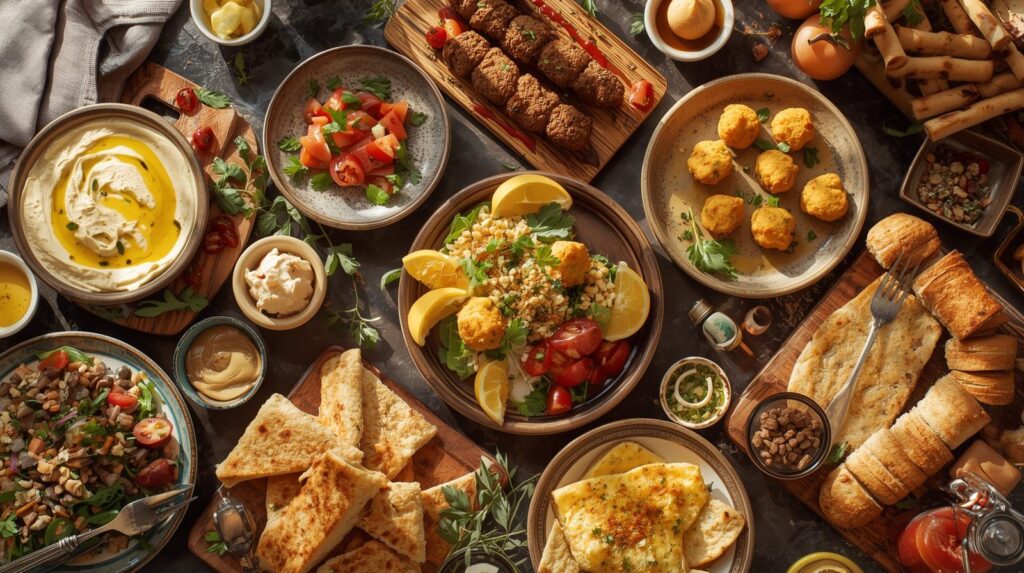

Introduction: A Culinary Tapestry Woven Through Time
There’s something magical about arriving in a land where each bite of food carries the echoes of centuries of culture. My trip to Lebanon was precisely that kind of experience—one where I found that exploring the best food in Lebanon isn’t just a taste test, but a journey through olive groves, ancient souks, mountain villages and Mediterranean shores.
From the moment I tucked into my first plate of freshly baked manoushe in Beirut, I realised: this isn’t just eating—it’s storytelling on a plate.
A Taste of History: The Roots of Lebanese Cuisine
Lebanese cuisine boasts ancient roots in the Eastern Mediterranean, with dishes that can be traced back thousands of years to eras of Phoenician, Persian, Egyptian, and Roman rule . The Phoenicians, legendary traders from the coastal region of modern-day Lebanon, spread ingredients and culinary knowledge across the Mediterranean, establishing foundations that would evolve over millennia .
The Ottoman Turks, who controlled Lebanon from 1516 to 1918, introduced foods that have become staples in the Lebanese diet, particularly a preference for cooking with lamb . After World War I, French influence introduced items like flan, caramel custard, and croissants, adding another layer to Lebanon’s culinary identity . This unique positioning between East and West has resulted in a cuisine that possesses the sophistication of European cooking with the exotic aromas of Middle Eastern spices.
Also read: Turkish Food Travel Guide
The Soul of Lebanese Cuisine
Lebanese cuisine is a harmonious blend of Mediterranean freshness, Middle Eastern spices, and Levantine warmth. It tells the story of a land where ancient civilizations met, traded, and feasted together.
What sets it apart is balance — every dish perfectly combines rich textures, fresh herbs, and tangy accents like lemon juice or sumac. Whether it’s a mezze spread or a hearty main, you’ll notice how flavor, color, and aroma work together beautifully.
A traditional Lebanese meal often starts with mezze — small plates shared among friends. It’s not just about eating; it’s about connecting, laughing, and slowing down to savor each flavor.
1. Hummus – The Creamy Icon of Lebanon
If Lebanon had a national dish, it would be hummus. I still remember sitting in a small café in Gemmayzeh, dipping warm pita bread into a smooth swirl of chickpea goodness topped with olive oil and paprika. The flavor was simple yet divine.
Why it’s special:
- Made from chickpeas, tahini, lemon juice, and garlic — the perfect blend of protein and creaminess.
- Served as part of mezze or as a side with grilled meats.
- The key to great hummus is texture — smooth, airy, and slightly nutty.
👉 Check it out: Le Chef in Beirut, one of the city’s most beloved traditional restaurants.
2. Tabbouleh – A Salad That Redefines Freshness
Forget your typical lettuce-based salads. Lebanese tabbouleh is a burst of freshness made with parsley, mint, bulgur wheat, tomatoes, and lemon juice.
When I had it at a family home in the Chouf Mountains, it was made from garden-fresh herbs picked that morning. The lemon zest and olive oil made it irresistibly light.
What makes it unique:
- Parsley is the star, not a garnish.
- Lemon juice adds zing, while olive oil gives depth.
- Often served cold as part of mezze.
3. Kibbeh – Lebanon’s National Pride
If hummus is Lebanon’s soft side, kibbeh is its bold heart. Often called the “national dish,” kibbeh combines finely ground meat (usually lamb or beef), bulgur, and spices.
During my visit to Tripoli, I tasted kibbeh nayyeh — a raw version served with olive oil and fresh mint. While it might sound daring, it was surprisingly smooth and flavorful, like a fine tartare.
Popular versions include:
| Type | Description |
|---|---|
| Kibbeh Nayyeh | Raw minced meat mixed with bulgur and spices |
| Fried Kibbeh Balls | Crispy shell stuffed with minced meat, onions, and pine nuts |
| Baked Kibbeh | Layered with spiced filling, baked like a casserole |
👉 Check it: Abdel Wahab Restaurant, famous for its authentic Lebanese fare.
4. Manakish – The Lebanese Breakfast Favorite
If you walk the streets of Beirut early in the morning, you’ll smell freshly baked manakish from every bakery. Often described as the Lebanese version of pizza, it’s a flatbread topped with za’atar, cheese, or minced meat.
When I grabbed one hot from the oven in Mar Mikhael, the crisp crust and fragrant za’atar instantly reminded me why breakfast in Lebanon is such a delight.
Fun fact:
Za’atar (a blend of thyme, sesame seeds, and sumac) is not just a spice — it’s a symbol of Lebanese identity.
5. Shawarma – The King of Lebanese Street Food
No list of the best food in Lebanon is complete without shawarma. Thinly sliced meat, stacked and roasted on a vertical spit, served with garlic sauce and pickles — it’s a street food legend. Also check Karachi’s best Street Food.
I tried both chicken and beef shawarma in Beirut’s Hamra district, and each bite was a masterpiece of flavor. The garlic sauce, known as toum, added a tangy punch that made it impossible to stop eating.
Pro tip: Pair it with Batata Harra (spicy potatoes) for the ultimate experience.
6. Falafel – Crispy, Golden Perfection
In Sidon’s old souk, I found a small stall serving the crispiest falafel I’ve ever had. These golden-brown chickpea fritters are crunchy on the outside and fluffy inside — often wrapped in pita with vegetables and tahini sauce.
Why it’s beloved:
- 100% vegetarian yet deeply satisfying.
- Best enjoyed fresh and hot from the fryer.
👉 Fun tip: Try it from local street vendors rather than fancy restaurants — that’s where the real magic happens.
7. Fattoush – A Salad Full of Texture and Flavor
While tabbouleh is all about herbs, fattoush celebrates crunch. Made with mixed greens, radishes, cucumbers, and toasted pita chips, it’s seasoned with sumac for a citrusy finish.
One of my favorite memories was enjoying a bowl of fattoush by the sea in Byblos — the crisp pita soaking just enough dressing to stay flavorful without getting soggy.
8. Grilled Kafta – Simple Yet Irresistible
Kafta is Lebanon’s answer to kebabs — minced meat blended with onions, parsley, and spices, then grilled over charcoal.
At a local barbecue in Zahle, I learned that the secret lies in the grill — the smoke adds a deep, earthy aroma that defines authentic Lebanese flavor.
Pair it with:
- Grilled vegetables
- Garlic sauce
- Flatbread or rice
9. Lebanese Desserts – A Sweet Ending
Lebanese desserts deserve their own love story. They perfectly balance sweetness with floral notes like rose water and orange blossom.
Must-try desserts:
- Baklava – Layers of phyllo pastry, nuts, and honey syrup.
- Knafeh – A cheese-based dessert soaked in syrup, often eaten for breakfast.
- Ma’amoul – Date-filled cookies often made for holidays.
When I had knafeh in a Beirut café, the mix of gooey cheese and crunchy pastry topped with crushed pistachios was heavenly.
👉 Check it: Al Hallab Sweets, one of Lebanon’s oldest and most iconic dessert shops.
Beyond the Plate: The Lebanese Food Experience
Home Cooking: Where Traditions Thrive
The heart of Lebanese cuisine beats strongest in home kitchens, where recipes passed down through generations are prepared with meticulous care. As Amal, a Lebanese home cook from Beirut, shares: “I learned most of my cooking skills from my talented mother, who had family recipes passed down from her mother, my grandmother” . This multi-generational transfer of knowledge ensures that culinary traditions remain alive, with each family adding their own subtle variations to classic dishes.
Traveling Spoon experiences, like the one offered by Amal and her family, provide visitors with an opportunity to participate in this authentic culinary tradition—learning to cook dishes like kibbeh, tabbouleh, and maakaroun (fried semolina fingers soaked in sugar syrup) in a traditional Lebanese home .
The Modern Lebanese Food Scene: Innovation Meets Tradition
While honoring tradition, Lebanon’s food and beverage scene continues to evolve. Today’s diners expect quality but are also looking for something more from their dining experience—whether that’s “a more informal, relaxed setting or a themed, immersive dining experience” .
Entrepreneurs like Tarek Alameddine of Buco and Bayhouse recognize that “There are many restaurants, but not many that are truly memorable” . This has led to innovative concepts that push boundaries while respecting foundational flavors.
Maya Bekhazi of Food Studio ME & Gastro Ventures ME notes that “Customers today want customization, wellness options and immersive experiences,” warning against a cookie-cutter approach . Some restaurants have responded by bringing “the kitchen to the stage,” transforming chefs into performers and customers into participants .
Food as Cultural Identity: More Than Sustenance
In Lebanon, food represents cultural pride, family bonds, and historical continuity. As one Lebanese cook explains: “People in Lebanon consider food as an important part of their lives and attribute to it for certain traditions, customs and even superstitions” . The country’s position as a cultural crossroads has created a cuisine that reflects diverse influences while maintaining a distinct character.
This culinary tradition has become a source of identity and economic opportunity both within Lebanon and abroad. The Lebanese diaspora has played a crucial role in spreading the cuisine worldwide while introducing new ingredients and practices that keep the cuisine innovative .
Top Places to Try the Best Food in Lebanon
| City | Must-Visit Spot | Specialty Dish |
|---|---|---|
| Beirut | Le Chef | Hummus, Shawarma |
| Tripoli | Akra Restaurant | Kibbeh Nayyeh |
| Byblos | Pepe’s Fishing Club | Grilled seafood |
| Zahle | Casino Mhanna | Kafta & Mezze |
| Sidon | Abou Rami | Falafel Sandwich |
Conclusion: Your Lebanese Food Story Awaits
To say I found the “best food in Lebanon” in just one dish would be misleading. Because the beauty of Lebanese cuisine is that every dish is a doorway—into a village, an era, a family’s history, a region’s produce. As I sit now recalling that meal of slow-cooked lamb in a stone mountain house, or the morning manoushe on a Beirut street, I realise each bite had a story.
If you go to Lebanon, approach your plate with curiosity. Ask about the herbs, ask about the bread, ask about the seasoning. You’ll find that you’re not just eating—you’re listening, learning, experiencing.
Now I invite you: when you plan your Lebanese food adventure, try two things:
- Pick one dish you know (hummus, falafel) and order it in a local spot.
- Pick one dish you don’t know—ask the server for a recommendation, or just go by appearance.
And while you’re at it: take a photo, jot down the memory, maybe ask the cook a question. Because in Lebanon, food remembers. And when you eat, you become part of the story.
The Helpful guide for your next trip: Best Persian Food You Must Try on Your Next Trip to Iran
FAQs About the Best Food in Lebanon
1. What is Lebanon’s national dish?
Kibbeh is considered Lebanon’s national dish, made from bulgur, minced meat, and spices, enjoyed in various forms including raw, baked, or fried.
2. What food is Lebanon most famous for?
Lebanon is famous for dishes like hummus, shawarma, tabbouleh, and baklava — all staples of Middle Eastern cuisine.
3. Is Lebanese food healthy?
Yes, Lebanese food emphasizes fresh vegetables, olive oil, and lean meats, making it one of the healthiest cuisines in the world.
4. What’s the best street food in Lebanon?
Shawarma and falafel are the kings of Lebanese street food — both flavorful, affordable, and widely loved.
5. Where can I try authentic Lebanese food?
Local eateries in Beirut, Tripoli, and Byblos serve some of the most authentic Lebanese flavors, often better than tourist spots.