
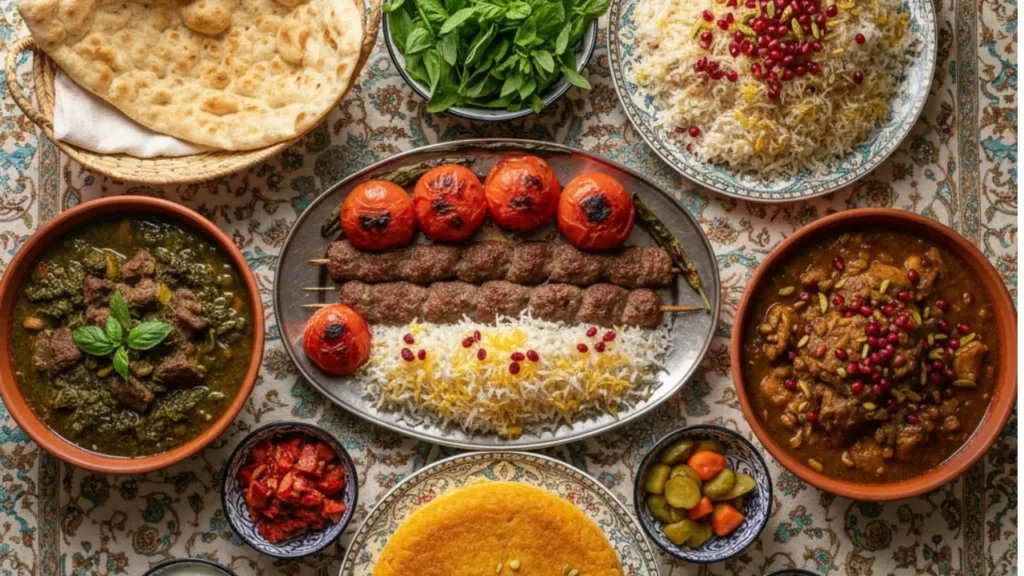

Introduction: A Taste That Tells a Thousand Stories
When I first landed in Tehran, I had one thing on my mind — food. Persian cuisine had always fascinated me with its poetic mix of aroma, color, and balance. The first bite of ghormeh sabzi, a herb stew simmered in perfection, was enough to tell me that Iranian food wasn’t just about flavor — it was about history, art, and heart. If you’re planning your first visit, discovering the best Persian food you must try is an essential part of experiencing Iran itself.
In this post, I’ll take you through dishes that left the deepest impression on my travels across Iran — from the bustling bazaars of Shiraz to cozy family kitchens in Isfahan.
1. Chelow Kebab – The Pride of Iran
No dish represents Iran better than Chelow Kebab, often called the national dish. It’s simple — grilled skewers of tender meat (usually lamb or beef) served with fluffy saffron rice, butter, and grilled tomatoes.
When I visited a local kebab house in Yazd, I was amazed by the patience and precision that went into marinating and grilling. Each kebab was juicy, smoky, and full of flavor. The combination of perfectly steamed chelow (rice) with a dab of butter melting on top was pure comfort.
Best place to try it: Alborz Restaurant in Tehran — a long-standing favorite known for its legendary kebabs. Learn more about the origins of Chelow Kebab
2. Ghormeh Sabzi – The Ultimate Comfort Stew
Ask any Iranian about their favorite home-cooked dish, and most will say Ghormeh Sabzi. This fragrant herb stew is made with parsley, coriander, chives, fenugreek, red beans, and tender lamb.
I first tried it in Isfahan at a family gathering. The deep green color and tangy aroma of dried limes (limoo amani) instantly stood out. It’s slow-cooked for hours, allowing the herbs and meat to blend into a rich, slightly sour flavor that’s unlike any stew I’ve had elsewhere.
Pro tip: Pair it with Persian tahdig (crispy rice crust) for the perfect texture contrast.
3. Fesenjan – A Royal Persian Classic
If there’s one dish that defines Persian sophistication, it’s Fesenjan — a pomegranate and walnut stew often made with duck or chicken. The sauce is thick, glossy, and rich in flavor — sweet, sour, and nutty all at once.
During my trip to Kashan, I enjoyed Fesenjan during Shab-e Yalda, Iran’s winter solstice celebration. The taste of pomegranate molasses combined with crushed walnuts and tender meat felt almost ceremonial — like eating a piece of Persian history.
Did you know? Fesenjan was once served in royal banquets in the ancient Persian Empire.
4. Tahchin – The Persian Saffron Rice Cake
Imagine a golden, crispy rice cake layered with saffron rice, yogurt, and chicken — that’s Tahchin.
I remember watching a cook in Shiraz carefully layering rice and chicken before baking it to perfection. When it came out, the tahdig crust was perfectly crisp, revealing a golden mosaic when sliced.
Best with: A side of mast-o-khiar (yogurt and cucumber dip) and a glass of doogh (minted yogurt drink).
5. Dizi (Abgoosht) – The Shepherd’s Stew
One of my most memorable meals was in a traditional teahouse in Tehran, where I tried Dizi, also known as Abgoosht. It’s a hearty stew of lamb, chickpeas, beans, tomatoes, and potatoes slow-cooked in clay pots.
The ritual of eating it is fascinating: you first pour out the broth into a bowl and sip it with flatbread, then mash the solids into a thick paste with a goosht-koob (meat masher).
It’s rustic, communal, and full of flavor — a dish that feels like a warm embrace.
6. Ash Reshteh – The Nourishing Persian Noodle Soup
This hearty, herb-packed noodle soup is a comfort dish found across Iran, especially during celebrations or cold weather.
When I tasted Ash Reshteh in Tabriz, it reminded me of minestrone but with a Persian soul — loaded with beans, herbs, noodles, and a dollop of kashk (fermented whey). The tangy creaminess of kashk transforms the soup into something extraordinary.
Fun fact: It’s often served during Nowruz, the Persian New Year, symbolizing prosperity and renewal.
7. Zereshk Polo – Barberry Rice with Chicken
If you love sweet and sour combinations, Zereshk Polo will become your favorite. The dish pairs saffron rice with zereshk (barberries) — tart red jewels that burst with flavor — and tender chicken.
In Yazd, I had it at a small garden restaurant where the chef garnished the dish with pistachios and orange zest. Every bite balanced tanginess and richness beautifully.
Best place to try: Haj Ali Akbari Restaurant in Yazd — known for traditional Persian rice dishes.
8. Gormeh Bademjan – Eggplant Lover’s Dream
Persian cuisine treats eggplant with reverence, and Gormeh Bademjan is proof. This stew combines fried eggplants, tomatoes, and either lamb or beef, creating a deep, savory taste.
It reminded me of Mediterranean moussaka, but with Persian spices and balance. I loved how the smoky flavor of the eggplant mingled with the rich tomato base — a true comfort dish for aubergine lovers.
9. Kuku Sabzi – The Persian Herb Frittata
When I stayed with a family in Shiraz, I had Kuku Sabzi for breakfast — a fragrant, green omelet made from parsley, cilantro, dill, spinach, and eggs. It’s light yet packed with flavor and nutrients.
It’s often served during Nowruz because its lush green color symbolizes growth and renewal. I loved it with warm lavash bread and a side of fresh yogurt.
10. Persian Desserts & Sweets: The Grand Finale
No exploration of the best Persian food you must try is complete without diving into its sweets. Persian desserts are a delicate blend of rosewater, saffron, and pistachios — ingredients that feel almost poetic.
Here are a few I couldn’t resist: Best Persian Food You Must Try
| Dessert | Description | Best Place to Try |
|---|---|---|
| Sohan | A brittle saffron toffee made with nuts and butter | Qom, the birthplace of Sohan |
| Faloodeh Shirazi | A frozen noodle dessert with rosewater and lime | Shiraz |
| Zoolbia & Bamieh | Sweet, syrup-soaked pastries popular during Ramadan | Tehran’s Grand Bazaar |
| Shole Zard | Saffron rice pudding with cinnamon and almonds | Everywhere in Iran |
Each bite offers a sensory journey — floral, nutty, sweet, and light all at once.
10 Best Countries to Visit in Winters – Where Magic Meets Snow
Cultural Insight: Persian Dining Etiquette
While savoring these dishes, I learned that sharing food in Iran goes beyond eating — it’s an act of connection. Meals are often served family-style, with rice at the center and stews or kebabs around it.
When offered food, always accept — even a small portion — as it’s a sign of respect. Iranians take pride in their hospitality, and dining is a way to express warmth and friendship.
My Personal Takeaway
What struck me most about Persian food is its sense of balance. Every dish harmonizes texture, aroma, and emotion. It’s not spicy, yet deeply flavorful; not flashy, yet incredibly refined.
As I left Iran, I realized that Persian cuisine tells a story — one of patience, generosity, and the art of turning simple ingredients into something timeless.
FAQs: Best Persian Food You Must Try
1. What is the most famous Persian dish?
Chelow Kebab is considered Iran’s national dish and is a must-try for any visitor.
2. Is Persian food spicy?
Not usually. Persian cuisine focuses more on balance, herbs, and aromatic spices rather than heat.
3. What are the best vegetarian options in Persian food?
Try Kuku Sabzi, Mirza Ghasemi (smoky eggplant dip), and Ash Reshteh.
4. What dessert should I try in Iran?
Faloodeh Shirazi and Sohan are local favorites, offering sweet, refreshing flavors.
5. Where can I experience authentic Persian dining?
Traditional teahouses and bazaar restaurants across Tehran, Isfahan, and Shiraz serve authentic dishes in a warm, cultural setting.
Conclusion: A Journey Through Taste and Tradition
Exploring the best Persian food you must try is like walking through a museum of flavors — every dish reveals something about Iran’s culture, history, and people. From the smoky kebabs to saffron-infused rice and syrupy sweets, each bite tells a tale of time-honored tradition and love for good food.
So when you plan your trip to Iran, don’t just visit the landmarks — taste them. Every city, every market, and every kitchen holds a story waiting to be savored.
👉 Ready to explore more food journeys?
Check out our guides on The Best Street Food in Lahore and Traditional Turkish Dishes You Can’t Miss.