
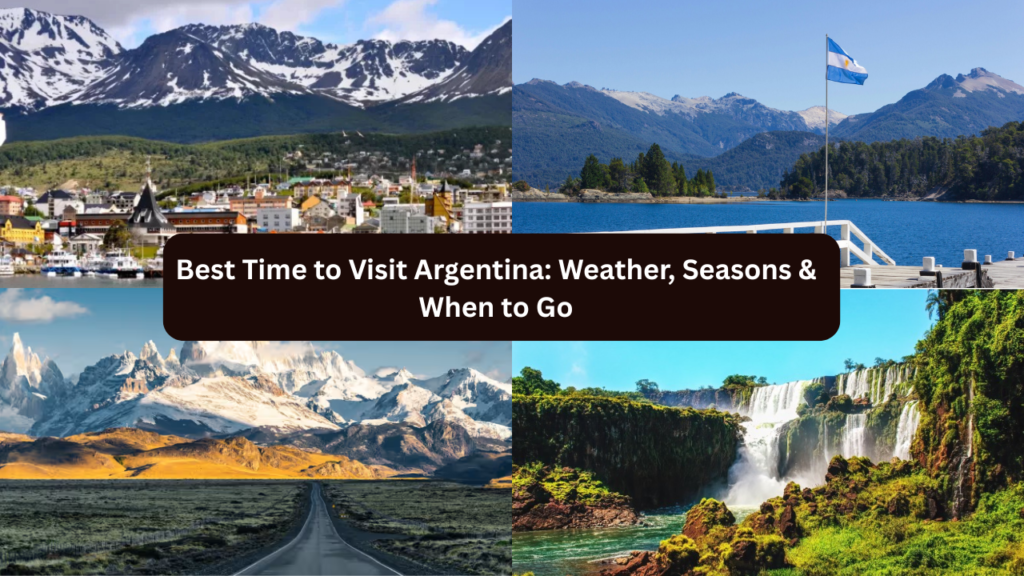

Everyone says the best time to visit Argentina is summer.
That’s lazy advice.
Summer is peak season because it’s convenient for international calendars, not because it’s optimal. If you blindly follow that rule, you’ll overpay in Patagonia, sweat through Buenos Aires, and stand shoulder to shoulder at Iguazu Falls. Argentina rewards strategy, not default timing.
Let me break this down the way I explain it to friends planning serious trips.
First Truth: Argentina Is Too Big for One “Best Time”
Argentina stretches from near-tropical jungle to subpolar Patagonia. Asking for one perfect month is like asking when to visit “Europe.”
The smarter question is:
What experience are you optimizing for?
Because the best time to visit Argentina for glaciers is not the best time for wine. And neither matches the best time for Buenos Aires culture.
Most people try to do all three in one trip. That’s the first mistake.
Patagonia in Summer: Necessary, But Overrated
Let’s get this out of the way.
Yes, if your priority is serious hiking in El Chaltén or Torres del Paine, December to February is your safest window.
Trails are open. Daylight lasts forever. Refugios operate normally.
But here’s what no one emphasizes enough:
- Wind is brutal
- Prices are inflated
- Booking late means compromising location
- Popular trails feel like guided tours without guides
I hiked Laguna de los Tres in January expecting serene mountain solitude. Instead, it felt like a controlled pilgrimage.
If you care about pure hiking access, summer might be the best time to visit Argentina for Patagonia.
Argentina’s landscapes remind me of how powerful timing can be when visiting dramatic destinations — much like in my article on Things to See in Jordan, where the desert light completely transforms the scenery.
Strategic take:
Summer is functional. Not magical.
Buenos Aires in Summer: Just Don’t
This is where I’m fully contrarian.
Do not plan your Argentina trip around Buenos Aires in January unless you love humidity. Locals leave the city for beach towns. Business districts feel half asleep. Afternoon heat can hit 35°C. Tourists assume summer equals vibrant energy. The truth is, Buenos Aires performs better in shoulder seasons.
April or October? That’s when the city shines.
Outdoor cafés feel natural instead of forced. Walking tours don’t feel like endurance tests. Even tango shows feel less transactional.
If urban culture is your priority, summer is not the best time to visit Argentina. It’s the most convenient time.
Those are not the same thing.
The Real Power Move: March and April
Here’s my strong opinion:
Late March to mid April is the most strategically balanced period in Argentina.
Why?
- Patagonia is still accessible
- Mendoza is in harvest mode
- Buenos Aires becomes walkable again
- Tourist volume begins tapering
Wine harvest in Mendoza during this period changes the entire atmosphere. Tastings feel alive. Vineyards are active. The air smells like crushed grapes.
That context makes experiences richer.
If you’re someone who loves planning your trip around outdoor experiences. I’ve done something similar when exploring South Asia in my guide to Things to Do in Islamabad, where timing completely changes the experience.
The best time to visit Argentina for multi-region efficiency is this shoulder window. It’s not peak hype season, which is exactly why it works.
If you’re planning a broader South American adventure, seasonal differences become even more important — especially when comparing Argentina with neighbouring destinations like those in my guide to Best Places to Visit in Brazil.
Iguazu Falls: Ignore the “Bigger Is Better” Advice
Most guides say go in peak rainy season so the falls are at maximum volume.
Yes, January waterfalls are dramatic. But you’ll also deal with:
- Suffocating humidity
- Heavy afternoon rain
- Massive tour groups
I visited once in high water season and once in late September.
September had slightly less volume. But clearer skies. Better photography. Fewer crowds blocking viewpoints.
Strategic takeaway:
- If you want raw power, go January.
- If you want control and visual clarity, go September or early October.
The best time to visit Argentina depends on whether you value intensity or balance. Official park climate averages confirm seasonal rainfall swings at argentina.travel, but averages don’t tell you what it feels like to stand in soaked clothes.
Winter: The Most Misunderstood Season
Most travelers write off June to August.
That’s a mistake if you’re city-focused.
Buenos Aires in winter is calm, intellectual, atmospheric. Bookstores. Jazz bars. Theater season. Fewer cruise tourists.
It’s not tropical. It’s cool and moody.
If your Argentina goal is cultural immersion rather than Instagram sunshine, winter might quietly be your best time to visit Argentina.
Patagonia winter hiking? Limited.
But photography of glaciers under moody skies? Incredible.
Weather data from global climate sources like the World Meteorological Organization confirms strong seasonal shifts, but lived experience tells you what spreadsheets don’t.
The Strategic Breakdown
Let’s stop thinking in seasons and start thinking in objectives.
If your primary goal is:
Serious trekking → January or February
Wine immersion → March
Balanced multi-region trip → Late March or April
Crowd avoidance → May or September
Urban culture depth → April or October
Budget control → May, early June
Most people default to December because it matches holidays.
Strategic travelers choose March. That’s the difference.
According to official climate insights shared by Argentina Travel, seasonal differences across the country can be dramatic, especially between Patagonia in the south and the subtropical north — which is why choosing the right month truly matters.
What I Would Do If I Had 14 Days
If I were designing an optimized two-week Argentina trip today:
- Late March
- Start in Buenos Aires for 4 days
- Fly to Mendoza during harvest
- Finish in El Calafate while trails remain accessible
This sequencing gives you:
- Comfortable city weather
- Peak wine atmosphere
- Functional Patagonia access
- Slightly reduced pricing compared to January
That’s strategic alignment.
Trying to squeeze Iguazu into that same trip? I wouldn’t. It dilutes weather optimization.
Sometimes the smartest travel move is cutting a region.
The Big Myth About the Best Time to Visit Argentina
The myth is that more sun equals better experience.
Argentina is experiential, not just scenic.
- Wine harvest energy matters.
- Wind patterns affect hiking satisfaction.
- Humidity changes how long you can explore.
- Crowds alter emotional tone.
The best time to visit Argentina is not about temperature charts.
It’s about alignment.
So What’s the Sharp Answer?
If you force me to choose one month for the broadest strategic win:
April.
Not because it’s perfect everywhere. Because it’s strong almost everywhere.
And in a country this geographically extreme, “strong almost everywhere” is the highest-level optimization you’ll get.