
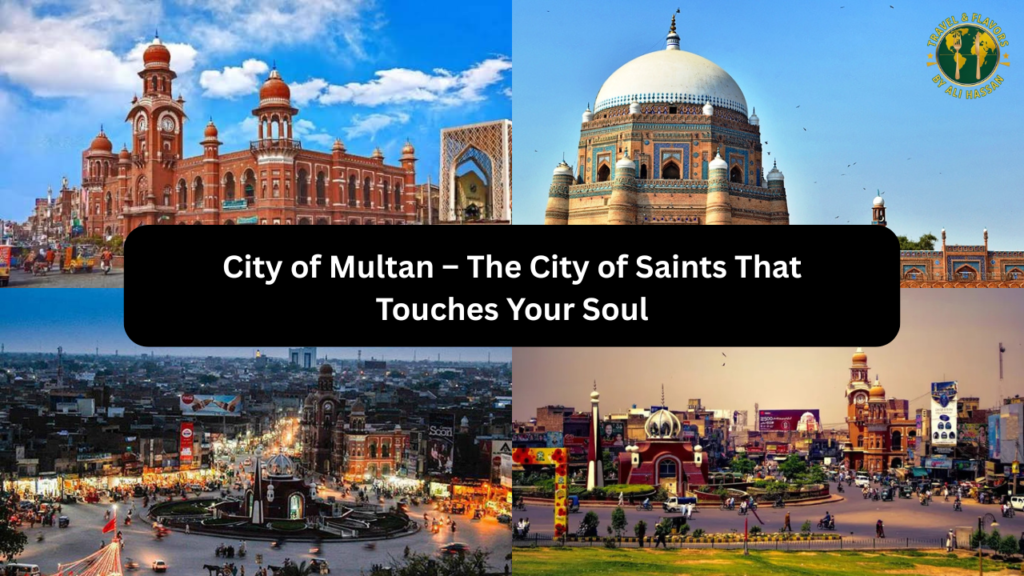

The first thing I noticed in Multan was not a shrine, or an ancient gate, or even the heat everyone warns you about.
It was silence.
Not no sound, but a different quiet. Of the sort you feel in the courtyard of Shah Rukn-e-Alam’s tomb at dusk, when pigeons fly in circles above and everyone seems to pause for a breath.
That was my first real encounter with the City of Multan and it did not feel like visiting a destination. It felt like entering a mood.
Most cities introduce themselves loudly. Multan does not. It waits for you to slow down.
Why the City of Multan Feels Different From Other Historic Cities
The City of Multan doesn’t impress instantly, but like places that leave a lasting impact, it changes you subtly, long after you’ve left.
I have visited Lahore more times than I can count. I have wandered through old Delhi and parts of Istanbul. All are historic, all are layered. But the City of Multan operates on a different emotional frequency.
Here, history does not shout. It murmurs.
Multan is old. Older than many cities that proudly advertise their age. Yet it carries that weight with humility. Shrines stand not as monuments but as living spaces. People pray, rest, argue, laugh, sell flowers, feed pigeons, all in the same sacred radius.
One unexpected thing I learned quickly is that Multan is not obsessed with impressing tourists.
The Shrines Are Not Tourist Attractions, They Are Daily Life
Shah Rukn-e-Alam: More Than an Icon
Most articles list Shah Rukn-e-Alam’s mausoleum as a must-visit. They mention architecture, colors, history. All true. But what they miss is how the space functions.
I visited twice.
The first time, I went like a tourist. Camera out. Observing. Admiring geometry.
The second time, I went early morning. No photos. Just sat near the edge.
That is when I noticed how locals interact with the shrine. Short visits. Quiet prayers. No drama. No performance. A few tears wiped discreetly. Faith here is not loud.
This is where the City of Multan begins to teach you something subtle. Spirituality does not have to be theatrical to be powerful.
Bahauddin Zakariya: A Living Legacy
At the shrine of Bahauddin Zakariya, I spoke to a caretaker who had been there for over three decades. Not a guide. Not a storyteller for tourists. Just a man who watches people.
He said something that stayed with me.
“People come asking for solutions. They leave with patience.”
That sentence explains Multan better than most books.
Old Multan City: Where Time Refuses to Behave Normally
Walking through old Multan feels like time bending slightly.
The streets are narrow, yes. Congested, also yes. But they are not chaotic in the way outsiders expect. There is a rhythm. Shopkeepers know each other. Neighbors talk across balconies. Kids navigate alleys like they were born with maps in their heads.
One afternoon, I deliberately stopped using Google Maps. Worst decision logically. Best decision experientially.
I got lost. I also found:
- A tiny halwa shop with no signboard
- A wooden door older than most countries
- A chai stall run by three generations under one name
This is not curated heritage. This is lived continuity.
Multani Food Is Not Fancy, But It Is Honest
Let us clear a misconception. If you come expecting Instagram food, you might be disappointed.
Multani cuisine does not care about plating. What surprised me was how restrained Multani flavors felt when I compared them to the louder, spice-forward street food culture I’ve experienced in Karachi.
Sohan Halwa: Overrated or Understood Wrong
Everyone talks about Sohan Halwa. Many tourists buy boxes, take one bite and move on.
Here is what worked for me.
Do not buy it from the biggest shop. Buy it fresh, still warm, preferably early morning. Eat a small piece, not a slab. Pair it with unsweetened tea.
Suddenly, it makes sense.
Street Food Reality Check
What surprised me was how restrained the flavors are compared to Lahore or Karachi. Less spice. More depth. Food here feels like it evolved for endurance, not indulgence.
This mirrors the City of Multan itself. Subtle. Grounded. Not trying to impress.
Heat, Dust and Reality: What No One Likes to Admit
Let us be honest.
Multan is hot. Brutally hot at times. Summer visits test your patience and planning.
Some streets smell. Some buildings are crumbling. Infrastructure does not always support the city’s importance.
This is not romantic decay. This is reality.
But here is the thing. Multan never pretends otherwise. It does not polish itself for visitors. It exists as it is. That honesty earns respect, even when it causes discomfort.
Multan Compared to Other Spiritual Cities
If I had to explain Multan through comparison:
- Lahore is expressive history
- Islamabad is planned modernity
- Peshawar is resilience
- Multan is acceptance
It does not demand attention. It rewards stillness.
This is why the City of Multan stays with you longer than expected. Unlike Lahore’s food scene, where indulgence is almost expected, Multan’s cuisine feels grounded, practical, and quietly satisfying.
Hidden Corners That Changed My Perception
Haram Gate at Dusk
Everyone rushes through gates during the day. Stay till dusk. Watch vendors pack up. Listen to the call to prayer echo differently here. The light turns everything gold and tired.
Local Bookshops Near Shrines
I found religious poetry sold beside old school notebooks. Faith and routine sharing shelf space. That image alone could explain Multan’s worldview.
What Worked for Me and What Did Not
Worked
- Visiting shrines early morning or late evening
- Walking instead of driving in old city
- Talking to caretakers, not guides
Did Not Work
- Trying to see everything quickly
- Visiting in peak afternoon heat
- Treating it like a checklist destination
The City of Multan resists efficiency.
Research Meets Reality
Multan has a rich history of Sufism that it shares with the rest of South Asia, and is widely referenced within academic literature on the topic of South Asian spirituality and cultural duality since the Delhi Sultanate. Specifically, documentation on the architectural heritage of Multan in UNESCO focuses on its characteristic use of blue glazed tiles, particularly in shrine construction, which is distinct from Mughal architecture found throughout not just Punjab but further afield.
For background on the building’s architecture, I referenced details that had been cross-checked in cultural heritage catalogues and local history searches via reliable academic sources and UNESCO’s cultural records.
Conclusion: Why the City of Multan Stays With You
Some cities give you photos. Some give you stories.
The City of Multan gives you perspective.
It teaches patience without preaching. It reminds you that history does not need restoration to remain relevant.
You do not leave Multan feeling entertained.
You leave feeling steadier.
And that might be its greatest gift.
FAQs – City of Multan
Is the City of Multan worth visiting for non-religious travelers?
Yes. Even without religious interest, Multan offers cultural depth, architecture and a slower worldview that feels grounding.
What is the best time to visit the City of Multan?
Late winter and early spring worked best for me. Summers can overwhelm the experience due to extreme heat.
How many days are enough for Multan?
Two to three unhurried days. Rushing defeats the purpose of visiting the City of Multan.
Is Multan safe for solo travelers?
In my experience, yes. Especially around shrines and old city areas during daylight and early evenings.
What makes the City of Multan different from other historic cities in Pakistan?
Its quiet spirituality, lived history and lack of performative tourism set it apart.