

The first time I truly understood Islamabad, it was not at a monument or viewpoint. It was at 6:15 AM, slightly out of breath, halfway up the Margalla Hills trail, watching the city wake up under a soft pink sky.
Islamabad does not scream for attention the way Best Food in Lahore does. It does not overwhelm you like Best Street Food in Karachi does. It grows on you quietly. The more time I spent exploring, the more I realized that most lists about Things to Do in Islamabad barely scratch the surface.
This is not a recycled “Top 10” list. These are experiences I tested, compared, sometimes messed up and learned from. What worked. What did not. And what surprised me.
If you are planning to explore the capital, here are 15 experiences that genuinely shape how you see the city.
According to the official tourism board, Islamabad consistently ranks among South Asia’s top cities for safety, cleanliness, and quality of life — factors that significantly shape the travel experience.
1. Hiking Trail 3 at Sunrise: The Version Most People Get Wrong
Most people attempt Trail 3 in the late morning and complain about the heat. That is mistake number one.
Trail 3 in the Margalla Hills is steep, rocky and humbling. I tried it at 11 AM once. I regretted it within 20 minutes. The real magic happens at sunrise.
By 5:45 AM, the air is cool and quiet. You will meet regular hikers, diplomats, students, retired army officers. It feels like a secret club.
What worked:
- Light backpack
- 1 liter water
- Early start
What did not:
- Heavy breakfast beforehand
- Cotton clothing
The reward is a panoramic view of Islamabad’s grid layout, something that reflects its master plan by Greek architect Constantinos Doxiadis. If you want to understand why the city feels organized and spacious, read about its urban planning principles through official archives like the Capital Development Authority website.
Among all the active Things to Do in Islamabad, this one changes your relationship with the city.
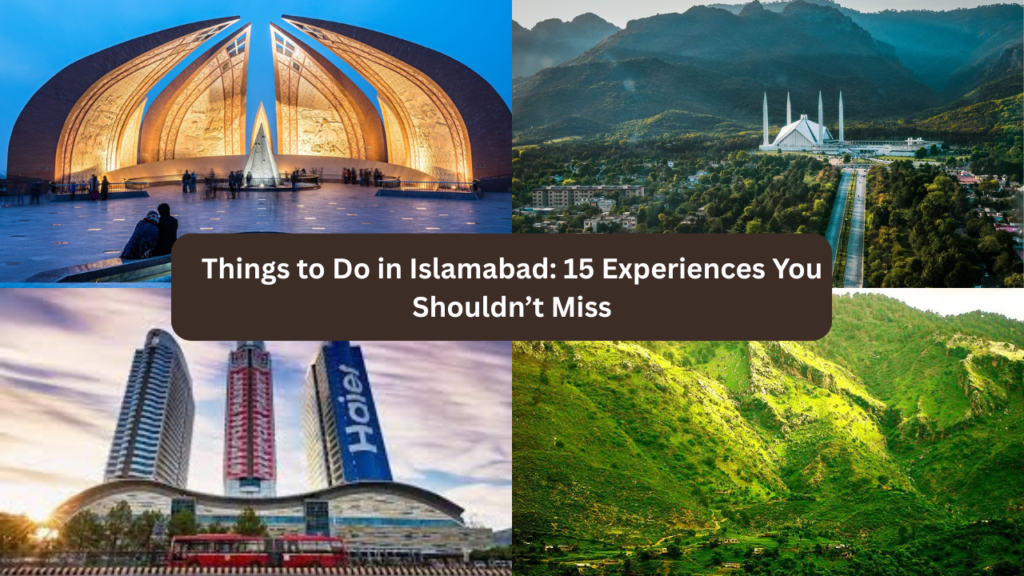
2. Faisal Mosque: Go Beyond the Selfie
Most visitors take photos and leave within 20 minutes. I did that too on my first visit. Big mistake.
Faisal Mosque is not just Pakistan’s largest mosque. It is a piece of architectural philosophy. Designed by Turkish architect Vedat Dalokay, its tent-like structure was controversial when proposed.
On my second visit, I went just before Maghrib. Sitting quietly on the marble floor as the sky shifted from orange to indigo changed the experience entirely.
Unexpected insight:
The acoustics inside are astonishing. Even a low recitation feels amplified.
Practical tip:
Visit on a weekday evening to avoid crowd pressure.
If you are exploring Islamic architecture deeply, you might also want to compare it with heritage mosques in City of Multan.
3. Daman-e-Koh vs Pir Sohawa: Which View Is Actually Better?
Let me settle this.
Daman-e-Koh is accessible and quick. Good for a 30 minute stop.
Pir Sohawa is higher, cooler and feels dramatic.
Here is my tested comparison:
| Factor | Daman-e-Koh | Pir Sohawa |
|---|---|---|
| Accessibility | Easy | Longer drive |
| Crowds | High | Moderate |
| Weather | Warmer | Noticeably cooler |
| Best Time | Sunset | Late afternoon |
If you have limited time, Daman-e-Koh works. If you want atmosphere and less chaos, drive to Pir Sohawa.
Among scenic Things to Do in Islamabad, this comparison matters more than you think.
4. Pakistan Monument Museum: Underrated for History Lovers
Pakistan Monument looks impressive from outside, but most people skip the museum underneath.
That is where the real value is.
Inside, you will find detailed narratives of Pakistan’s independence, cultural diversity and historical milestones. The multimedia exhibits are surprisingly engaging.
I once brought a friend visiting from Europe. He expected a basic museum. He left impressed by the storytelling depth.
For factual context about Pakistan’s history, academic resources from institutions like the British Library archives provide fascinating colonial era documents that complement what you see here.
If you enjoy structured historical explorations, this is one of the more intellectually rewarding Things to Do in Islamabad.
5. Lok Virsa: Where Pakistan Feels Alive
Lok Virsa Museum is one of those places that feels quiet but powerful.
I spent almost three hours here unintentionally. The recreated village scenes, truck art displays, regional costumes and folk music recordings create a full sensory experience.
Unexpected finding:
Children engage deeply with interactive exhibits. It is not just a static museum.
6. Saidpur Village: Romanticized but Still Worth It
Saidpur Village is often criticized for being commercialized.
Yes, the cafés are slightly overpriced.
But here is what people miss. The restored old Hindu temple structure and hillside setting give you a rare pre-partition historical glimpse.
Best approach:
Visit late afternoon, explore the old lanes first, then sit for tea.
Among relaxed Things to Do in Islamabad, this one works if you manage expectations.
7. Rawal Lake Kayaking: The Surprise Therapy Session
Rawal Lake is usually treated as a picnic spot.
But kayaking there early morning is something else.
The first time I tried it, I underestimated the arm workout. Fifteen minutes in, I was humbled. But the stillness of the water and distant hills create a mental reset.
Real world benefit:
Stress reduction. No notifications. No noise.
This is one of the most underrated Things to Do in Islamabad if you need quiet.
8. Centaurus Mall: More Than Just Shopping
The Centaurus Mall often gets dismissed as generic.
But from an urban lifestyle perspective, it represents Islamabad’s modern consumer shift.
Compare it to older commercial hubs in Rawalpindi and you see a clear contrast in demographic behavior and brand culture.
If you are into urban studies or business trends, observing foot traffic patterns here can be surprisingly insightful.
9. Islamabad’s Café Culture: Sector F-6 vs F-7
Instead of naming one café, here is what I noticed:
- F-6 feels quieter, slightly older crowd.
- F-7 feels younger, trend-driven.
Try working remotely in both sectors for a day. The vibe difference is noticeable.
10. Shah Allah Ditta Caves: A Hidden Chapter
Shah Allah Ditta Caves date back centuries and were once part of an ancient trade route.
I expected something dramatic. Instead, I found subtle history carved into stone.
Limitation:
Facilities are minimal.
Benefit:
Authentic atmosphere without heavy commercialization.
Among historical Things to Do in Islamabad, this one feels raw.
11. Hiking Trail 5: Easier, Social, More Scenic
Trail 5 is less intense than Trail 3 and more community oriented.
If you are new to hiking, start here.
Comparison idea for infographic:
“Trail 3 vs Trail 5 Difficulty Breakdown”
12. Visit Taxila from Islamabad
Taxila is about 40 minutes away and worth it.
It connects you to Gandhara civilization and Buddhist heritage. UNESCO recognizes its archaeological significance.
Pairing Islamabad with Taxila gives depth beyond the modern capital narrative.
13. Monal Restaurant Experience
The Monal is touristy. Yes.
But here is the thing. The city view at night is unmatched.
What worked:
Buffet for variety.
What did not:
Weekend prime time without reservation.
14. Islamabad’s Bookshops and Quiet Corners
Small independent bookstores in F-7 surprised me. Islamabad reads more than it shows.
If you enjoy intellectual exploration, spending an afternoon browsing here is unexpectedly fulfilling.
15. A Day Trip to Rawalpindi’s Raja Bazaar
Raja Bazaar feels like stepping into another world.
From Islamabad’s order to Rawalpindi’s chaos in 20 minutes.
This contrast helps you appreciate the capital differently.
Conclusion: What Islamabad Taught Me
The real Things to Do in Islamabad are not just about ticking locations. They are about contrast.
Order vs chaos. Modern vs ancient. Quiet vs vibrant.
Islamabad rewards those who slow down. If you rush it, you will call it boring. If you explore it deeply, you will call it balanced.
Now I am curious.
Which experience surprised you the most?
Or is there something in Islamabad you think people overlook?
Drop your thoughts below and explore our related deep dives like to continue discovering beyond the obvious.