
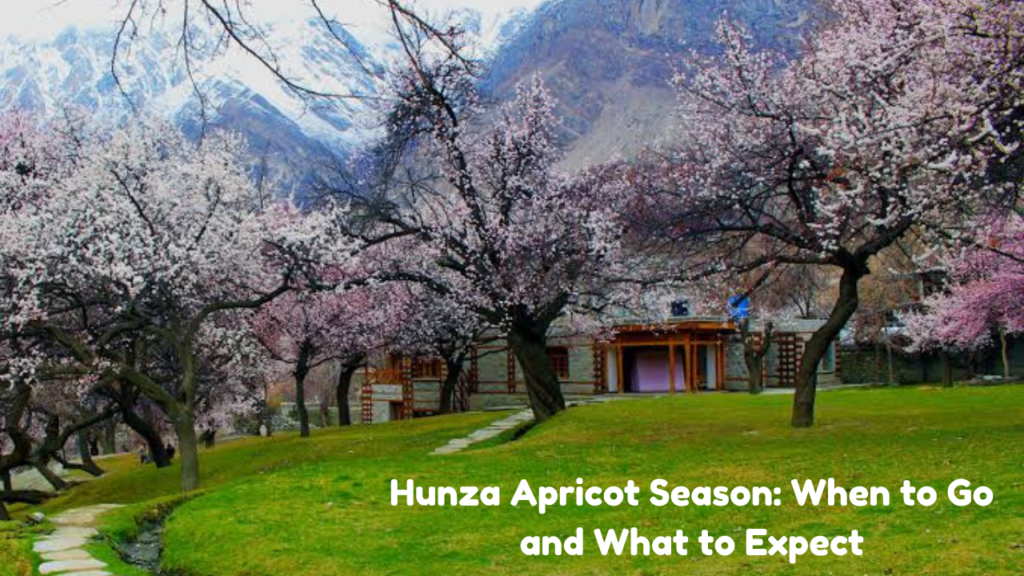

There is a particular kind of disappointment that comes from arriving in Hunza two weeks too late for the blossoms. You see the photographs everywhere online — pale pink and white flowers against snow-capped peaks, the kind of image that looks digitally enhanced until you realize it is not. Then you plan a trip, get the timing slightly wrong, and arrive to find green leaves where the flowers used to be. The valley is still beautiful. It is just not the specific beauty you came for.
Hunza apricot season is not one event. It is actually two distinct seasons that most travel guides blur together carelessly, and understanding the difference is the single most important piece of planning information for anyone trying to time a Hunza trip around this fruit.
The first season is blossom season, in spring, when the apricot trees flower before any other tree in the valley and turn entire hillsides white and pink for roughly three to four weeks. The second season is harvest season, in summer, when the same trees produce the actual fruit, and the valley’s rooftops fill with apricots drying in the sun in a tradition that has shaped Hunza’s food culture and reputation for generations.
I have been to Hunza during both. They are completely different experiences with completely different things to see, eat, and photograph. This guide separates the two properly and gives you the specific information needed to plan around whichever one you actually want.
Why Apricots Define Hunza More Than Any Other Fruit
Before the season breakdown, it helps to understand why this single fruit has such an outsized place in Hunza’s identity.
Hunza’s terrain is some of the most difficult agricultural land in Pakistan. The valley sits at high altitude in the Karakoram Range, with limited flat land and a short growing season. For centuries, large-scale farming was simply not viable here the way it is on the plains of Punjab. What worked instead were fruit trees planted on stone terraces carved into the mountain slopes, and among those trees, the apricot adapted better than almost anything else.
Nearly every household in Hunza owns apricot trees. The fruit has historically functioned as food, medicine, fuel, and a meaningful part of the local economy all at once. Fresh apricots are eaten through summer as a near meal replacement during the busiest agricultural days. The kernels inside the pit are roasted and eaten like almonds, or pressed for oil that is used in cooking and traditional remedies. Dried apricots sustain households through winter months when fresh fruit is unavailable. Even the hard shell of the pit gets used as long-burning fuel in the traditional “Ha” room that keeps Hunza homes warm in the cold season.
This is also the fruit at the center of Hunza’s reputation for longevity. The valley has long been associated with stories of unusually long-lived residents, and while some of the more extreme historical claims are exaggerated, researchers and travelers have consistently pointed to the apricot-centered diet as a meaningful part of the explanation. Whether or not you believe the longevity claims in full, the apricot’s nutritional density and its near-total presence in the local diet are not in dispute.
Understanding this context changes how you experience Hunza apricot season. You are not just looking at pretty flowers or eating good fruit. You are watching a relationship between a community and a single tree species that has shaped how an entire valley has survived and organized its year for generations.
Blossom Season: Mid-March to Late April
When It Actually Happens
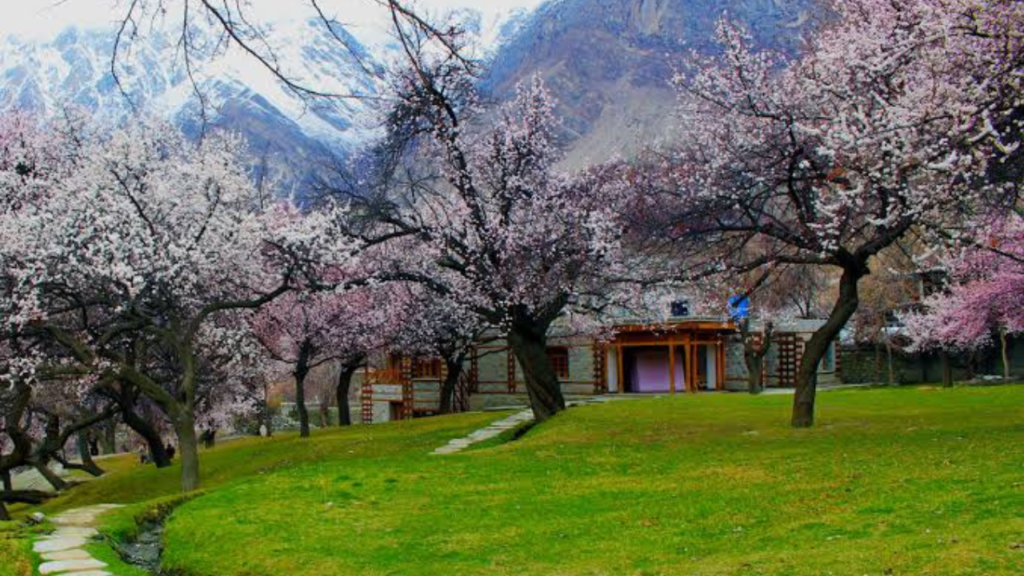
Hunza’s apricot blossom season runs from approximately mid-March to late April, with peak bloom typically occurring in the last two weeks of March and the first week of April. This timing is consistent across most sources who track it closely, though the exact dates shift by a week or so depending on that year’s specific winter and early spring weather.
A useful detail that most single-season guides miss: Hunza’s blossom season is not just apricot. Cherry blossoms typically bloom slightly earlier, peaking in the same late March window, while apricot blossoms tend to follow and extend the visual season into mid-April. If your primary interest is apricot blossoms specifically, the back half of this window, early to mid-April, is often your safer bet, since cherry blossoms can sometimes peak and begin dropping while apricot trees are just reaching full bloom.
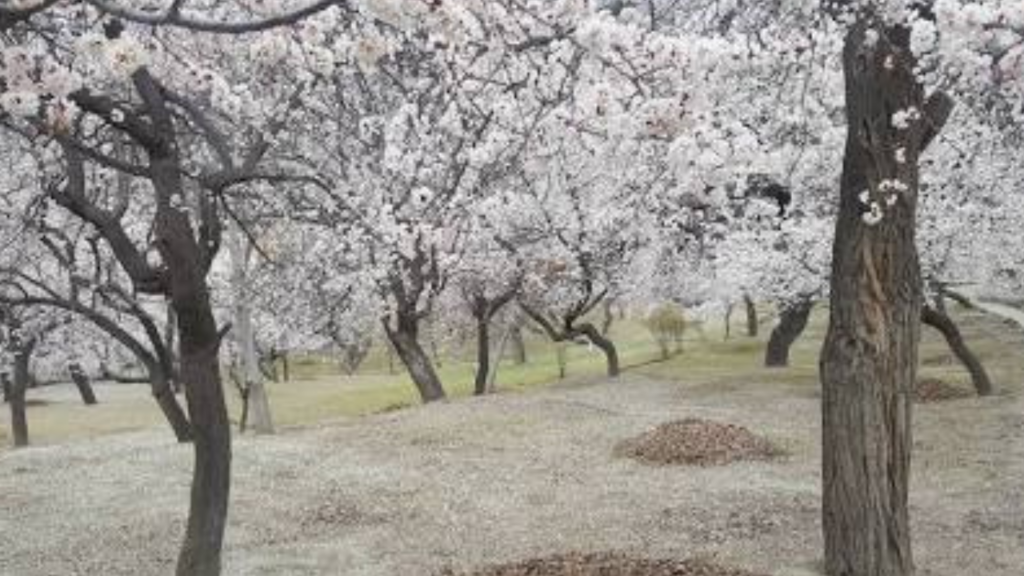
The blossom period itself is short. Once a tree reaches full bloom, the flowers typically last seven to ten days before petals begin falling, weather depending. Wind and unseasonal rain can shorten this further. This is the reason every serious guide to Hunza blossom season repeats the same advice: book in advance and build some flexibility into your dates, because missing the peak by even four or five days noticeably changes what you see.
Where to Go for Blossoms
Different parts of the Hunza Valley bloom at slightly different times, which is actually useful information for extending your blossom window if your schedule allows more than a few days.
Karimabad and Altit are the heart of central Hunza and typically the first to reach full bloom. Altit, one of the oldest settlements in the valley, has narrow stone streets and wooden balconies surrounded by orchards that create a genuinely timeless atmosphere when the trees are flowering. The Royal Garden at the foothills of Altit Fort has a dense concentration of apricot and cherry trees and is one of the most photographed single locations during blossom season.
Upper Hunza, including Gulmit and the Gojal villages, blooms slightly later than Karimabad. This is the detail that extends your effective blossom-viewing window if you plan the trip correctly: start in Karimabad and Altit when their blossoms peak, then move north toward Gulmit a few days later to catch a second wave as those trees reach their own peak.
Passu, with its iconic cathedral-shaped peaks rising dramatically behind the village, becomes one of the most photographed locations in northern Pakistan during this period specifically because the contrast between the jagged dark rock formations and the soft pink-white blossoms in the foreground is visually unlike anything else in the region.
Duikar and Eagle’s Nest, the elevated viewpoints above Karimabad, give you a wide-angle view over entire hillsides of blossoming orchards with Rakaposhi and Ultar Sar still snow-covered behind them. This elevated vantage point is genuinely worth the climb during blossom season specifically because it lets you see the scale of the bloom across multiple villages at once, rather than just the trees immediately around you.
What the Experience Actually Involves
Blossom season is the quieter of Hunza’s two apricot seasons in terms of crowd volume, though this has been changing as the season gains more recognition. Spring weather in the valley during this window is mild and pleasant by day, cool at night, with layered clothing being the practical approach since temperature swings are significant.
The blossom period overlaps with Navroz, a Persian word meaning “a new day,” celebrated by the Shia Ismaili community at the Karimabad Polo Ground to mark the new year and the start of the agricultural cycle. This is not a tourist event. It is a genuine community celebration, and visitors who happen to be in the valley during Navroz and are invited to observe describe it as one of the more meaningful cultural experiences available during blossom season, distinct from simply photographing flowers.
The honest caveat about blossom season: it requires precise timing in a way that harvest season does not. Apricot harvest happens over a longer window with more forgiveness if your dates shift by a few days. Blossom viewing has a much narrower margin for error, and weather can compress or extend the bloom in ways that are genuinely difficult to predict more than a week or two in advance. If your travel dates are fixed months ahead, treat blossom season as a strong possibility rather than a guarantee, and have a backup appreciation plan for the valley’s other spring qualities if the flowers have already gone by the time you arrive.
Harvest Season: Late June Through August
When It Actually Happens
Hunza apricot harvest season runs from approximately late June through August, with peak ripening typically occurring from late June to mid-July. This is when the same trees that flowered in spring produce the actual fruit, and the valley transitions from a season about appearance to a season about substance.
The harvest window is considerably longer and more forgiving than blossom season. Unlike the precise week-by-week timing required to catch peak bloom, apricot harvest unfolds gradually across roughly two months, with different orchards and different elevations producing ripe fruit at slightly different times. This makes harvest season a far easier target for travelers without flexible dates.
What You Actually See and Experience
This is where Hunza apricot season becomes less about photography and more about participating in something. From late June onward, the orchards fill with ripening fruit, the color shifting from green to the distinctive golden-orange that gives the valley its summer character. Walking through Altit or Karimabad during this period, you are surrounded by trees heavy with fruit, and unlike blossom season where the experience is primarily visual, harvest season is the one where you actually eat what you came to see.
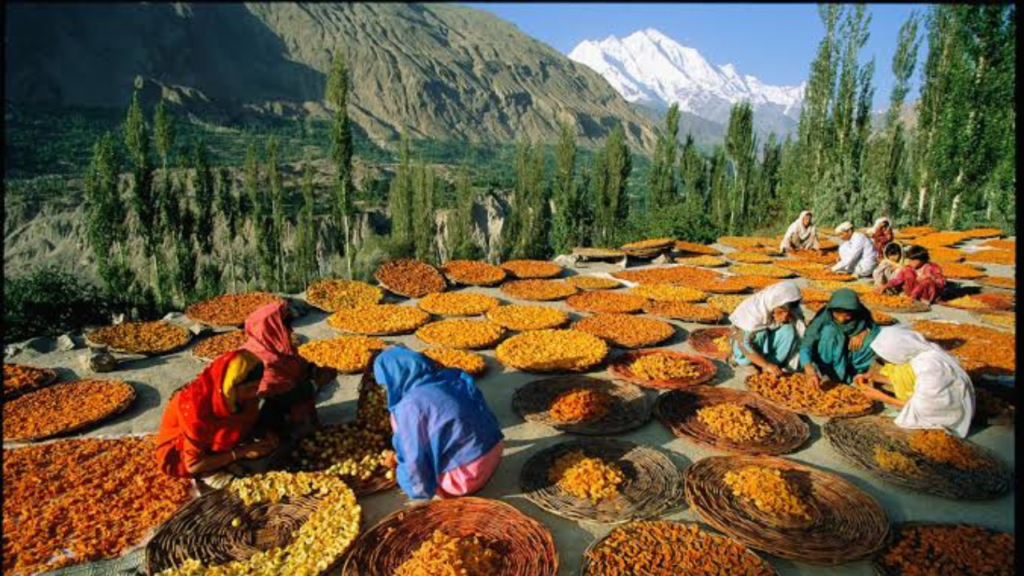
The drying process is the part of harvest season that most visitors find genuinely fascinating once they understand it. Apricot picking traditionally uses specially made baskets called girann, designed to be gentle on the fruit and prevent bruising. After collection, the apricots are split by hand to separate the seed from the flesh. The halved fruit is then laid out on circular frames, traditionally on household rooftops, to dry in the sun over the following days. By July and August, rooftops across Hunza are visibly covered in drying apricots, an image that is distinctly tied to this specific season and does not exist at any other point in the year.
The seeds are not discarded. They are dried separately and used for multiple purposes: roasted and eaten directly, pressed for the apricot kernel oil that is central to much of Hunza’s traditional cooking, or ground into flour used in specific local dishes. The hard outer shell, once the kernel is removed, becomes long-burning fuel for winter.
The food you should actually try during harvest season:
Fresh apricots eaten straight off the tree are, according to almost everyone who has tried them in season, noticeably sweeter and more flavorful than apricots available almost anywhere else, including the dried versions sold commercially outside Hunza. The specific variety known locally simply as “the Hunza apricot” is large, sweet, and juicy in a way that has built its own small reputation among fruit specialists.
Chamus, a traditional dried apricot juice, is the drink most associated with the valley’s apricot culture, though interestingly it is more commonly made in late winter and early spring from the previous year’s dried stock, using soaked dried apricots that are traditionally kneaded by hand until soft, then mixed with water. If you visit during harvest season, you may not see chamus being made from this year’s fruit yet, but the dried apricots you can buy directly from harvest season are what eventually become it.
Bartarin-a-dawdo, a dried apricot soup, and various dishes using apricot kernel flour like giyalin and burus-shapik (a cheese-filled chapatti, sometimes made with fruit oil) are traditional Hunza foods that incorporate the fruit in forms beyond simply eating it fresh. Asking a local guesthouse or homestay if you can try any of these during harvest season is one of the more rewarding small requests you can make as a visitor.
Where Harvest Season Looks Best
Unlike blossom season, where specific viewpoints matter enormously, harvest season is more about the overall valley atmosphere than any single best location. That said, a few places stand out.
Altit and Karimabad remain central, with the Royal Garden’s apricot trees now bearing fruit rather than flowers, and the surrounding terraced orchards visibly transformed from their spring appearance.
Any village with active rooftop drying is worth walking through slowly in late July and August. This is not a staged tourist activity. It is simply what households are doing during this period, and observing it respectfully, ideally with a local guide who can explain what you are seeing, is more valuable than any organized tour.
Hopper and Nagar Valley, just across the river from central Hunza, have dense orchards and receive considerably fewer tourists than Karimabad during this period, making them worth a visit if you want the harvest atmosphere without the growing summer tourist traffic that the main Hunza circuit attracts.
Blossom Season vs Harvest Season: A Direct Comparison
| Blossom Season (Mid-March to Late April) | Harvest Season (Late June to August) | |
|---|---|---|
| Peak window | Narrow, roughly 1-2 weeks | Wide, roughly 6-8 weeks |
| Weather | Mild, cool nights, occasional rain | Warm, pleasant, peak summer tourism |
| Main activity | Photography, scenic walks | Eating fresh fruit, witnessing harvest and drying |
| Crowd level | Growing but still moderate | Peak Hunza tourist season, busier overall |
| Timing risk | High, bloom can shift or shorten | Low, fruit ripens over a longer period |
| Cultural overlap | Navroz New Year celebration | General summer valley life, less festival-specific |
| Best for | Photographers, those chasing the iconic image | Food-focused travelers, those wanting full valley access |
A Closer Look: What Local Families Actually Do During Each Season
Most travel guides describe Hunza apricot season from the outside, as something to observe. It is worth understanding what is actually happening inside the rhythm of a Hunza household during each window, because that context changes what you notice as a visitor.
During blossom season, the agricultural work is mostly preparatory. Families are pruning trees, clearing irrigation channels that bring glacial meltwater down through the terraced fields, and preparing the ground for the wheat and vegetable crops that will be planted alongside the orchards once the soil warms. The apricot trees themselves require relatively little active management during their blossom period beyond basic care. This is part of why blossom season feels calmer and more contemplative as a visitor experience: you are seeing a valley in a moment of quiet anticipation rather than active labor.
Harvest season is the opposite. This is when Hunza’s agricultural calendar reaches its most demanding stretch. Apricot picking happens early in the morning, before the heat of the day, with entire families involved in the process. Older family members often handle the more delicate task of separating fruit from seed, a skill that takes practice to do efficiently without bruising the flesh. Children are frequently involved in carrying baskets and helping spread the halved fruit out on the drying frames. This is genuine working agricultural life, not a performance staged for visitors, and the difference is noticeable if you spend any real time in the valley during this period rather than passing through quickly.
One detail that surprises first-time harvest season visitors: the sheer volume of fruit involved. A single mature apricot tree can produce far more fruit than a family could possibly eat fresh, which is the entire reason the drying tradition developed in the first place. Walking through a village in mid-July, you will see baskets and trays of apricots everywhere, not as a curated display but simply because there is genuinely that much fruit being processed at once.
A Note on Photography and Respect During Either Season
Both versions of Hunza apricot season have become increasingly popular subjects for travel photography, and this has changed the visitor experience in ways worth being aware of.
During blossom season, the most photogenic locations, particularly around Altit’s Royal Garden and the Duikar viewpoint, can draw enough photographers during peak bloom that the experience feels less solitary than it did even five years ago. This is not a reason to avoid these locations, but arriving early in the morning, before 8am, generally gives a quieter experience and better light than midday.
During harvest season, photographing the rooftop apricot drying process is something many visitors want to do, and it is worth approaching with the same courtesy you would want extended to your own home and work. These are private rooftops belonging to families going about their actual seasonal labor, not a public exhibit. Asking permission, ideally through a local guide or homestay host who can make the introduction appropriately, produces both better photographs and a more respectful interaction than photographing from a distance without any acknowledgment.
For blossom season: Build in at least a 5 to 7 day window rather than fixing a single arrival date, particularly if traveling from outside Pakistan where rebooking flights is not simple. Mid-to-late March through mid-April is your target range, with the understanding that the precise peak shifts year to year. Accommodation in Karimabad fills quickly during the confirmed peak bloom window, so book ahead once you have a reasonably confident date range.
For harvest season: Late June through July offers the best combination of peak fruit availability and reasonable crowd levels before the absolute height of summer tourist season. August remains good for fruit but coincides with Hunza’s busiest tourist month overall, when Khunjerab Pass and the full range of summer activities draw the largest crowds of the year.
Getting there: Most travelers reach Hunza via the Karakoram Highway from Islamabad, a 15 to 18 hour drive typically split over two days with overnight stops, passing through Besham, Chilas, and a stop at the Nanga Parbat viewpoint near Jaglot. A faster alternative is flying to Gilgit, roughly a one-hour flight, followed by a 2.5 hour drive to Hunza, though flights are weather-dependent and prone to delay regardless of season.
No special permit is required to visit Hunza Valley itself in either season. A permit may be needed specifically for Khunjerab Pass at the Pakistan-China border, which is typically arranged locally and is more relevant to summer harvest-season visitors since the pass itself is snow-affected for parts of the year.
How Hunza’s Apricot Seasons Connect to the Wider Pakistan Travel Circuit
Hunza apricot season rarely exists in isolation for most travelers. It is usually one stage of a longer northern Pakistan journey, and understanding how it fits into that broader circuit helps with overall trip planning.
Travelers moving on from Hunza toward Gilgit-Baltistan’s other major destination will want to think carefully about season choice there too. Our detailed Skardu in summer vs winter comparison covers exactly the kind of seasonal trade-off that applies just as directly to Skardu as it does to Hunza’s blossom and harvest windows, including how Deosai National Park access is similarly tied to a specific seasonal calendar.
For those approaching the north from Chitral rather than directly up the Karakoram Highway, the Shandur Pass route connects the two regions in one of Pakistan’s most spectacular overland journeys. Our guide to things to do in Chitral covers that western approach and the cultural contrast between Chitral’s Kalash communities and Hunza’s own distinct Burusho heritage.
The broader winter character of this entire mountain region, including how food culture shifts when the apricot harvest is long finished and households are living on dried stores, is covered in our piece on winter travel in Northern Pakistan, which gives useful context for understanding why the harvest and drying tradition matters so much to begin with.
Most northern Pakistan trips begin and end in the capital, and our guide to things to do in Islamabad is worth reading for anyone treating the city as more than a transit point before or after the Hunza leg of their journey.
The food culture connection extends beyond the mountains too. Hunza’s plant-based, fruit-centered traditional diet is a striking contrast to the meat-heavy food cultures found elsewhere in Pakistan. Our guide to the best nihari in Lahore makes for an interesting comparison precisely because it represents such a different relationship between a community and its food, shaped by entirely different geography and history.
For travelers looking to round out a broader Pakistan itinerary that spans far beyond the north, our situates Hunza’s apricot culture within the wider context of regional food traditions that define different parts of the country as distinctly as apricots define Hunza.
One external resource worth checking before locking in dates: Gilgit-Baltistan Tourism Department publishes updated seasonal advisories and road condition information that is more current than any single travel blog, particularly useful for confirming Karakoram Highway conditions before a spring or summer trip.
Final Word: Picking the Right Season for You
If the image in your head is pink and white blossoms against snow-capped peaks, the photograph everyone has seen, you are choosing blossom season, and you need to accept the timing risk that comes with it. Build flexibility into your dates, watch regional reports as your travel window approaches, and treat early-to-mid April as your most reliable target for apricot specifically, slightly later than the cherry blossom peak.
If you want to actually taste what makes Hunza’s reputation, watch the rooftop drying tradition that has sustained this valley for generations, and experience the full range of summer activities the region offers, harvest season from late June through July is your answer, with a much wider and more forgiving window than blossom season offers.
Either way, you are visiting a valley where a single fruit has shaped diet, economy, and culture in a way that very few places in the world can claim about any single crop. That context is worth carrying with you regardless of which version of Hunza apricot season you choose to experience.
Frequently Asked Questions: Hunza Apricot Season
Peak bloom typically falls in the last two weeks of March through the first week of April, with the overall blossom window extending from mid-March to late April. Exact dates shift slightly year to year based on winter weather, so building a few days of flexibility into your travel plan is recommended.
Harvest season runs from approximately late June through August, with peak ripening typically in late June to mid-July. This window is considerably wider and more forgiving than blossom season.
No, these occur roughly three months apart. They require two separate trips, typically one in spring and one in summer, since the same trees flower in March-April and then take until June-July to produce ripe fruit.
Karimabad and Altit are the most accessible and typically bloom first. Passu offers the most dramatic visual contrast with its cathedral peaks. Upper Hunza villages like Gulmit bloom slightly later, allowing you to extend your blossom-viewing window by moving north as the central valley’s blossoms begin to fade.
Yes, harvest season overlaps with Hunza’s peak summer tourist season, particularly in August when all mountain passes including Khunjerab are open and trekking conditions are at their best. Late June and early July offer slightly calmer conditions while still catching peak apricot ripeness.
During harvest season, fresh apricots straight from the tree are the highlight, along with traditional dishes using apricot kernel oil and flour like giyalin and burus-shapik. Chamus, the traditional dried apricot juice, is more commonly made from the previous year’s dried stock and may not be freshly prepared during the current year’s harvest itself.
No special permit is required to visit Hunza Valley itself in either blossom or harvest season. A permit is needed specifically for Khunjerab Pass at the Pakistan-China border, which is generally only relevant to summer harvest-season travelers planning to continue that far north.


Pingback: Fairy Meadows Pakistan 2026: What Nobody Tells You Before You Go
Pingback: Khunjerab Pass Complete Guide 2026: Everything Before You Go
Pingback: Kumrat Valley 2026: Complete Guide to Pakistan's Most Underrated Mountain Paradise