
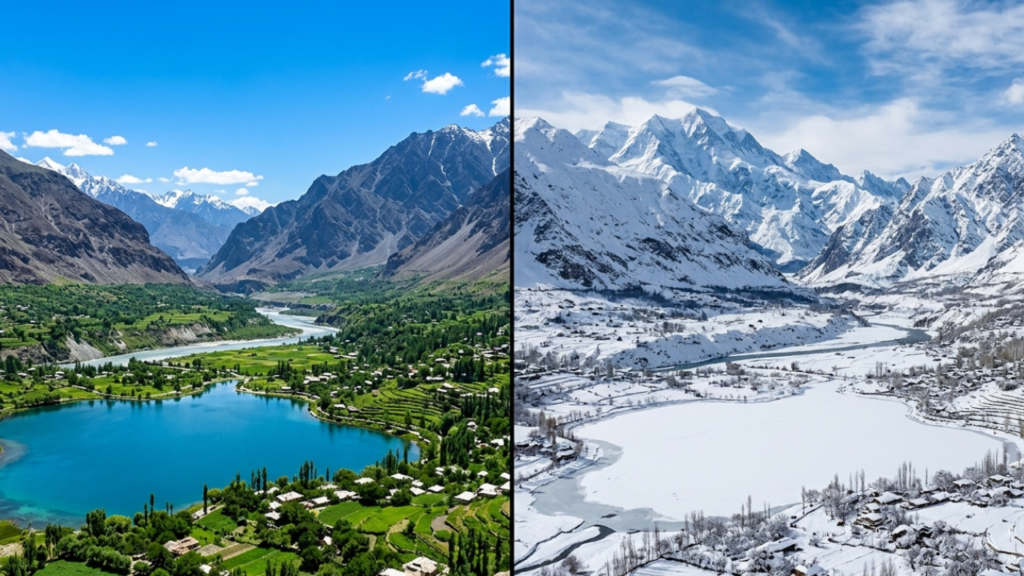

Most people who have been to Skardu once spend the entire drive back arguing about when they should return.
Not whether they should return. That question answers itself the moment you see the Indus River at Kachura from above, or stand at the edge of Deosai with nothing between you and the horizon except sky. The question is always about timing. Summer gives you access to almost everything. Winter gives you something harder to describe and almost impossible to photograph in a way that does it justice.
I have visited Skardu in both seasons. They are genuinely different trips, not the same destination with different weather. The comparison of Skardu in summer vs winter is not really about which season is “better.” It is about what kind of traveler you are, what you are physically prepared for, and whether the idea of a road that might close for two days because of snowfall excites you or makes you immediately reconsider.
This guide goes through every meaningful dimension of that comparison — weather, access, crowds, costs, specific attractions, food, and the less obvious things that nobody mentions in the standard travel roundups.
The Basic Geography That Shapes Both Seasons
Before the comparison, one piece of context that most Skardu travel guides skip entirely: Skardu sits at approximately 2,228 metres above sea level in the Skardu Valley of Gilgit-Baltistan. It is surrounded by the Karakoram range, which includes K2 — the second highest mountain in the world at 8,611 metres.
This geography produces extreme seasonal variation. Summer temperatures in the valley reach 30 to 35 degrees Celsius on hot July afternoons. Winter nights regularly drop to minus 10 to minus 15 degrees Celsius, with recorded lows going below minus 20 in January. The same town. The same elevation. A 50-degree temperature range between its hottest and coldest points.
This is not a destination where the difference between seasons is a matter of packing a light jacket versus a heavier one. Skardu in summer vs winter is a comparison between two genuinely different climatic experiences, and both have specific implications for what you can do, where you can go, and how much the whole thing costs.
Getting There: The Access Question That Changes Everything
Summer Access
Skardu is connected to Islamabad by two routes: air and road. In summer, both are fully operational and both are unpredictable in their own ways.
PIA operates flights between Islamabad and Skardu. The flight takes approximately 45 minutes and on a clear day offers views of Nanga Parbat and the Karakoram that justify the ticket price even if the service does not. The problem is that Skardu airport sits in a valley surrounded by high peaks, and flights require specific visibility conditions to operate. Cancellations and delays are common even in summer. Travelers who have booked onward connections from Skardu airport have found themselves stranded when weather conditions deteriorated. The golden rule: never book a time-sensitive onward ticket within 48 hours of your Skardu flight.
The road route from Islamabad goes via the Karakoram Highway through Gilgit and then south on the Jaglot-Skardu Road. This journey takes 16 to 20 hours depending on traffic and road conditions. In summer, the road is fully operational. It is also one of the most scenic drives in Pakistan, with the KKH running alongside the Indus for significant stretches. The road has improved substantially over the years but remains a mountain highway with all that implies: narrow sections, rockfall zones, and stretches where the drop on one side is significant enough to demand full attention.
Winter Access
Winter access to Skardu is where the comparison gets genuinely complicated.
Flights operate in winter but with even higher cancellation rates than summer. Cold air and limited visibility around the Karakoram peaks make winter flights a particularly unreliable option. Travelers who visited Skardu in winter have reported waiting multiple days in Islamabad for a flight that eventually flew, and multiple days in Skardu for a return flight that kept getting postponed. If your work schedule requires certainty, winter Skardu flights are a gamble.
The road in winter requires more careful planning. The KKH and Jaglot-Skardu Road remain open through most of winter with a 4×4 vehicle, but snowfall events can close specific sections for hours or days. This is not a theoretical risk — it is a documented regular occurrence. Road closures of two to five days are mentioned specifically in recent travel accounts of winter Skardu visits. If you are comfortable with the possibility of being stuck for a few extra days in a place as beautiful as Skardu, this is a manageable situation. If your schedule is rigid, it is a serious concern.
The honest verdict on access: summer is significantly more reliable for both air and road. Winter is achievable but requires flexible dates and a traveler who can genuinely embrace the unexpected.
Weather: What the Numbers Actually Feel Like
Summer (June to September)
June marks the beginning of the peak tourist season. Temperatures in Skardu valley are pleasant by day, typically 20 to 28 degrees Celsius, dropping to 10 to 15 degrees at night. July and August are the warmest months, with valley temperatures reaching 30 to 35 degrees on the hottest days. Late July and early August bring the possibility of brief monsoon showers, but Skardu sits in the rain shadow of the Karakoram and receives far less monsoon precipitation than most of Pakistan. The showers are usually short and followed by clear sky.
September is the beginning of autumn and is considered by experienced Skardu travelers to be the single best month of the year. Temperatures are perfect — warm by day, genuinely cool at night. The summer crowds have thinned. The Karakoram light in September has a quality that photographers specifically seek out, and the first hints of autumn color appear in the poplars and willows of the valley floor. The sky clarity in September is typically better than July or August.
What summer weather means practically: virtually all roads are open, all attractions are accessible, hotels are fully staffed and operational, and you can plan an itinerary with reasonable confidence that weather will not reroute it.
Winter (December to February)
December through February is when Skardu becomes genuinely cold. Daytime temperatures in the valley hover around 0 to 5 degrees Celsius. Nights regularly drop to minus 10 to minus 15 degrees Celsius, sometimes lower. Snow covers the valley floor from mid-December onward in most years. The surrounding peaks are under heavy snow from November.
This is not merely uncomfortable. It is cold enough that standard winter clothing from the plains is genuinely insufficient. Down jackets rated to minus 10 degrees, thermal base layers, proper insulated boots, and gloves that can handle sustained outdoor activity are not optional. Travelers who arrived in Skardu in January without adequate gear have described the experience as difficult in ways that distracted from the beauty.
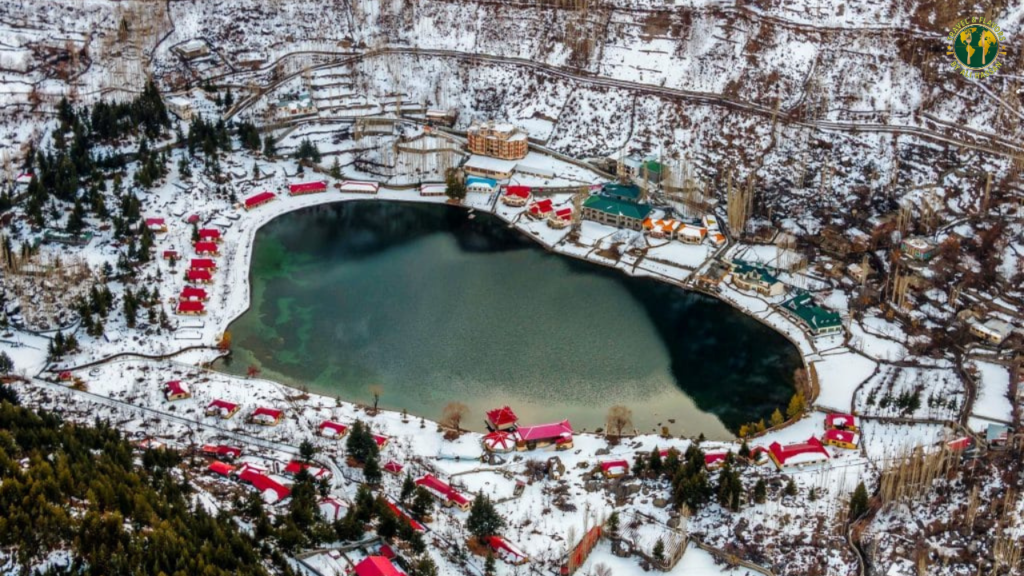
What winter weather means practically: some roads to outlying areas become impassable or highly risky. Deosai National Park is completely inaccessible — the plateau sits at 4,114 metres and is under deep snow from October to May. K2 base camp trekking is not possible. However, the valley itself, Kharpocho Fort, Shangrila Lake, Satpara Lake, and Shigar Fort all remain accessible.
The Crowd Question: Summer vs Winter Realities
This is the dimension of the Skardu in summer vs winter comparison that most guides either overstate or understate.
Summer Skardu, specifically July and August, is genuinely crowded by the standards of a remote mountain valley. Hotels in Skardu town and particularly near Shangrila Resort book out weeks in advance during peak season. The road to Deosai has jeep convoys. The Shangrila Resort grounds are full of visitors. Popular viewpoints have queues. This is not a negative commentary on summer — the destination justifies the crowds — but anyone expecting a solitary wilderness experience in July is going to be recalibrating those expectations on arrival.
September is the sweet spot for crowd management. The families who pulled children out of school for the summer are back. The peak trekking groups have finished their K2 base camp expeditions. Hotels have rooms available, often at slightly reduced rates. The attraction experience is noticeably more spacious.
Winter Skardu is genuinely quiet. The hotels that do operate in winter run at a fraction of summer capacity. The Shangrila Resort grounds are empty. Kharpocho Fort can be visited with no other tourist in sight. The frozen Shangrila Lake at its peak in January is a scene that visitors describe in hushed terms — not just because of the cold, but because of the profound silence of a resort that in summer barely has a free table.
This quiet has a quality that photographs cannot capture. Walking through Skardu’s bazaar in January, past the closed summer shops and the locals going about their actual daily lives with no tourist apparatus around them, is a different kind of travel from the summer experience. Whether that quality justifies the access difficulty and cold is a personal calculation that each traveler has to make honestly.
Attractions: What Opens, What Closes, What Changes
Deosai National Park
This is the most significant single difference in the Skardu in summer vs winter comparison.
Deosai National Park — the second-highest plateau in the world at an average elevation of 4,114 metres, covering 843 square kilometres of alpine meadows, streams, and lakes — is only accessible from June to October. The park officially opened for the 2025 season on June 15th and closed in late October. From November through May, it is under snow so deep that access is essentially impossible even with a 4×4 vehicle.
In summer, Deosai is one of the most extraordinary landscapes in Asia. The plateau becomes a rolling carpet of wildflowers in July — golden, purple, yellow, and white across meadows that stretch to every horizon. Himalayan brown bears, whose population has grown from 19 individuals in 1993 to over 78 in recent counts according to the Gilgit-Baltistan wildlife department, can occasionally be spotted from a safe distance in designated wildlife zones. Sheosar Lake sits at 4,142 metres, making it one of the highest lakes in the world, and on clear days the reflection of surrounding peaks in its water has a quality that justifies the bumpy 4×4 ride to get there.
If Deosai is a significant part of your reason for visiting Skardu, you must come in summer. There is no equivalent winter experience for this attraction.
Shangrila Resort and Kachura Lakes
Shangrila Resort, built around the heart-shaped Lower Kachura Lake and famous for its restaurant inside the fuselage of a crashed aircraft, is open year-round but transforms completely between seasons.
In summer, the resort gardens are in full color, the lake is brilliant turquoise, and the combination of water, flowers, and surrounding peaks produces the iconic Skardu photograph that most people have seen online. The resort charges Rs. 500 to 1,000 entry for non-guests. Rooms at the resort itself run Rs. 20,000 to 30,000 per night in peak season.
In winter, Shangrila Lake partially freezes by December and can freeze solid by peak January. The resort grounds are largely empty. The frozen lake against snow-covered pine trees and the Karakoram peaks in the background is a visual that is completely different from the summer version — arguably more dramatic, certainly more rare. The handful of travelers who visit Shangrila in January describe it as the most unexpectedly beautiful thing they saw in Pakistan.
Upper Kachura Lake, 70 metres deep and sitting at 2,500 metres elevation, freezes completely in winter. In summer, a boat ride costs approximately Rs. 2,000 for 15 minutes, and the crystal-clear water is deep enough that you can see the bottom at the edges.
Kharpocho Fort
Built in the 16th century above Skardu town, Kharpocho Fort is accessible year-round and changes character dramatically between seasons. Summer visits involve climbing in heat with views of the green valley floor and the winding Indus. Winter visits involve climbing through snow with views of a white valley that has a stillness and scale that is absent in the busier months. The fort structure itself remains the same. The experience of standing on its highest walls is completely different depending on the season.
K2 Base Camp and High-Altitude Trekking
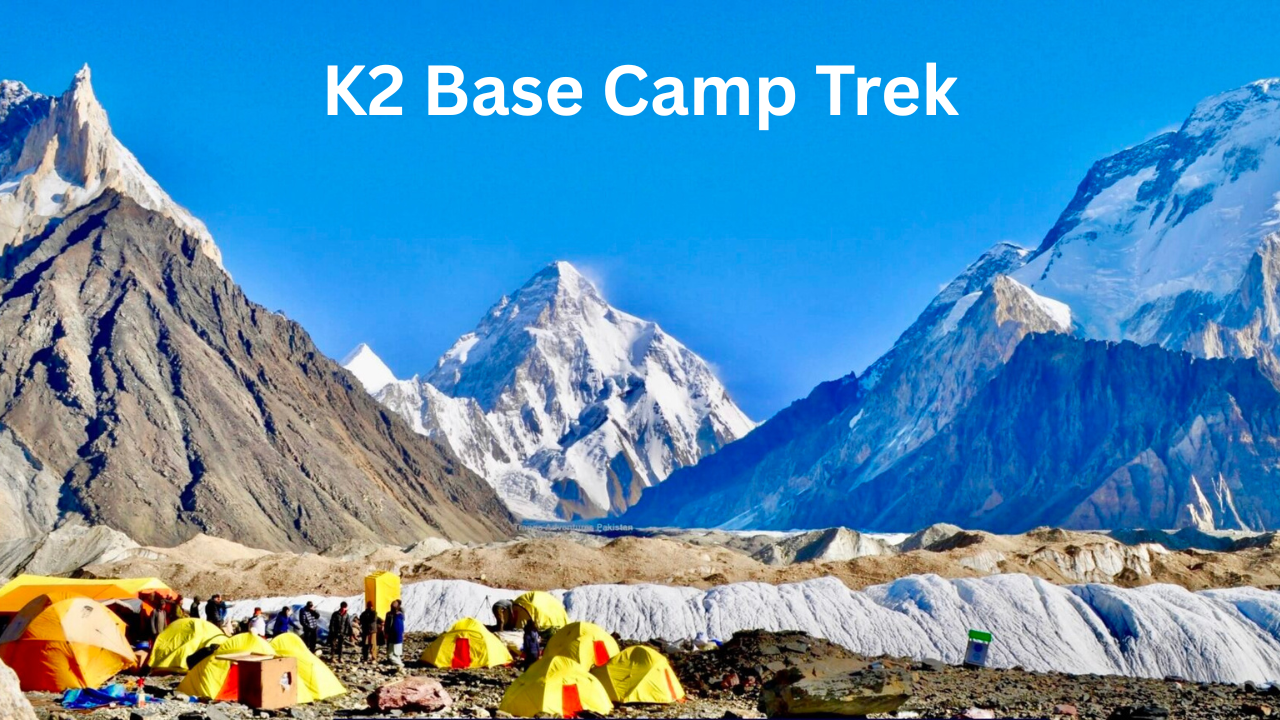
This is summer-only, and specifically late summer. The K2 base camp trek via Askole and the Baltoro Glacier is one of the most demanding and celebrated treks in the world. The standard season is June through August. The mountaineering season for K2 summit attempts peaks in late July. In winter, these routes are under snow and ice that make them inaccessible to all but the most technically equipped and experienced expeditions.
If K2 base camp trekking is your reason for visiting Skardu, you are visiting in summer. This is not a comparison — it is a fixed constraint.
Food and Local Life: A Genuine Seasonal Difference
The food in Skardu in summer is mostly hotel food. The influx of tourists has created a service economy around visitor preferences: Pakistani standard dishes, some Balti specialties for tourists who ask, and the fast-food options that appear wherever tourism money concentrates.
Winter Skardu reveals what the local food culture actually looks like. The dhabas and small restaurants that serve locals — not the hotel dining rooms — are operating without a tourist audience. The Balti cuisine, which includes dishes like Mamtu (steamed dumplings similar to Chinese momo), Tsampa (roasted barley flour mixed with butter tea), and the winter staple of Sattu (roasted grain flour mixed with water or butter), is eaten authentically and daily rather than produced as a cultural experience for visitors.
Butter tea — Gurgur chai in Balti — is a winter drink that Skardu locals rely on not just for warmth but as a caloric supplement in a cold environment. It is made with yak butter, tea, and salt, and it is an acquired taste that visitors either find deeply satisfying or deeply confusing. Drinking it in a local home in January is a genuinely different experience from being offered it as a tourist activity in August.
Our guide to winter travel in Northern Pakistan covers the full food culture of this region including Hunza, where the butter tea and chapshuro tradition has its own character distinct from Skardu’s Balti variation.
Cost Comparison: What Summer and Winter Actually Cost
This is one area where the comparison strongly favors winter — if you can get there.
| Cost Item | Summer Peak (July-Aug) | Winter (Dec-Feb) |
|---|---|---|
| PIA flight Islamabad-Skardu | Rs. 18,000 to 30,000 | Rs. 12,000 to 18,000 |
| Shangrila Resort (per night) | Rs. 20,000 to 30,000 | Rs. 12,000 to 18,000 |
| Mid-range hotel Skardu | Rs. 6,000 to 12,000 | Rs. 3,000 to 6,000 |
| Jeep rental per day | Rs. 8,000 to 15,000 | Rs. 6,000 to 10,000 |
| Deosai National Park entry | Rs. 300 to 500 | Not applicable (closed) |
The cost advantage of winter is real and consistent. Hotels that are fully booked months in advance in July negotiate rates in January. Jeep drivers who can charge premium rates in peak season are more flexible when tourist traffic has dropped significantly. This cost difference can be meaningful for budget-conscious travelers who are willing to accept the access uncertainty and cold.
The catch is the additional cost of proper cold-weather gear. A traveler who needs to purchase a proper down jacket, thermal base layers, and insulated boots before a winter Skardu trip is potentially spending Rs. 15,000 to 30,000 on gear that reduces the accommodation cost advantage significantly.
Who Should Go in Summer and Who Should Go in Winter
Go in summer if: You want to see Deosai National Park. Full stop. Nothing else on this list matters as much as this single fact. If Deosai is on your itinerary, your season is June to September and ideally July for the wildflowers or September for the best combination of weather, light, and reduced crowds.
You are trekking to K2 base camp or any high-altitude route. These are summer activities without exception.
You are traveling with children, elderly family members, or anyone for whom extreme cold is a genuine health concern.
You have a fixed return date that cannot move. Summer access, while imperfect, is significantly more reliable than winter.
Go in winter if: You have been to Skardu in summer and want to understand the place more completely. The winter version of Skardu is not a diminished experience — it is a different one, and many travelers who have done both describe the winter visit as the more meaningful of the two.
You value solitude and authentic local interaction over the full range of tourist attractions.
You are a photographer with specific interest in frozen landscape photography. The visual vocabulary of Skardu in winter — the frozen Shangrila Lake, the snow-covered Karakoram peaks against a January sky, the completely silent valley floor — is genuinely distinct from summer photography.
Your travel dates are flexible and you can absorb a delay of several days without significant consequence.
The Skardu Experience Beyond the Season
Skardu sits at the gateway to a larger northern Pakistan travel circuit that most visitors explore in stages. Our piece on winter travel in Northern Pakistan covers the full arc of the northern road — from Murree through Naran, up the KKH to Hunza, and through to Skardu — with specific detail on the food, accommodation, and travel logistics that vary by season.
For those connecting Skardu to a longer Pakistan itinerary, Islamabad is the departure point for most Skardu-bound travelers and worth building proper time into rather than treating as a transit stop. The capital has its own food culture and experiences that complement rather than compete with the northern mountain experience.
If the northern trip has inspired broader Pakistan travel curiosity, our covers what the country’s less-documented regions offer to travelers who want to go beyond the established northern circuit.
For the food specifically — the Balti cuisine, the butter tea, the way eating changes at altitude — our Karachi street food guide makes an interesting contrast: two Pakistani food cultures separated by 1,800 kilometres and about as different as two cuisines within the same country can be.
The broader Pakistan travel context matters too. Our guide to Multan covers the southern Punjab end of Pakistan’s travel geography — the kind of destination that helps you understand how much the country changes between its southern plains and its northern peaks.
For anyone planning a trip that combines Skardu with the road journey from Lahore or Islamabad, the food stops along the way matter. Our guide to the best dhabas on the Lahore Islamabad motorway covers the M2 service areas in detail — the last proper food stops before the road north begins in earnest.
One external resource worth reading before committing to a season: the Gilgit-Baltistan Tourism Department publishes updated road condition and attraction accessibility information that is more current than any travel blog, including this one. Check it before finalizing dates, particularly for winter travel.
The Honest Final Verdict
If you are visiting Skardu for the first time and you want to see everything the destination has to offer — Deosai, K2 base camp, the full range of lake and valley experiences — go in summer, specifically September if you can manage it. The crowds are manageable, the weather is as close to ideal as Skardu gets, and the access is reliable enough to plan around.
If you have already been to Skardu in summer and you are wondering what the second visit should look like, go in winter. Do not bring a rushed schedule. Bring better gear than you think you need. Go to Shangrila Lake in January when it is frozen and stand there in the silence for longer than feels necessary. That is the version of Skardu that the summer crowds never quite see.
The question of Skardu in summer vs winter ultimately resolves to this: summer gives you more. Winter gives you something different. Both are worth experiencing if Skardu matters to you at all, and if you have been there once, it almost certainly does.
Frequently Asked Questions: Skardu in Summer vs Winter
Neither is objectively better. Summer offers full attraction access including Deosai National Park and K2 base camp trekking, reliable weather, and comfortable temperatures. Winter offers solitude, frozen landscapes, authentic local life, and significantly lower costs. Your ideal season depends on what kind of travel experience you are looking for.
September is consistently recommended by experienced Skardu travelers. The summer crowds have thinned, weather is pleasant and stable, and the autumn light produces exceptional photography conditions. For wildflowers and wildlife at Deosai, July is the peak.
Yes, but with caveats. The main Jaglot-Skardu Road remains open for most of winter with a 4×4 vehicle. However, snowfall events can close sections for two to five days. Flexible dates and a 4×4 vehicle are essential for winter road travel to Skardu.
No. Deosai sits at 4,114 metres above sea level and is completely inaccessible under snow from approximately November through May. The park typically opens in mid-June and closes in late October. Anyone planning a Deosai visit must travel in summer.

Pingback: Hunza Apricot Season: When to Go and What to Expect
Pingback: Fairy Meadows Pakistan 2026: What Nobody Tells You Before You Go
Pingback: K2 Base Camp Trek 2026: Complete Guide to the World's Greatest Walk
Pingback: Kumrat Valley 2026: Complete Guide to Pakistan's Most Underrated Mountain Paradise