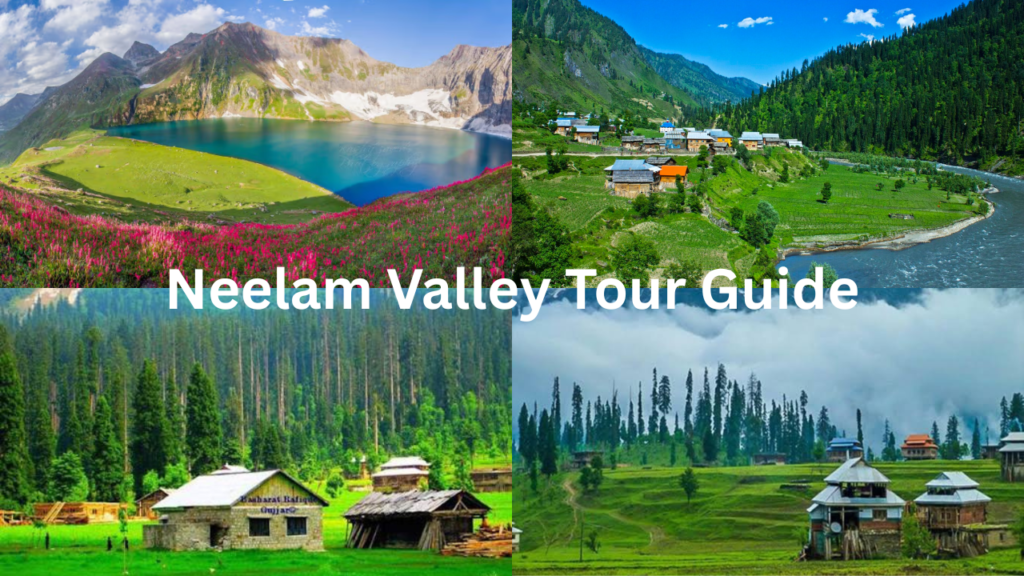

Nobody tells you the truth about the road to Taobat before you go.
Tour operators describe it as “a memorable adventure.” Vloggers film it with dramatic music. The official tourism brochures call it scenic. All of this is accurate and all of it is incomplete. The road from Kel to Taobat in upper Neelam Valley is 45 kilometres of mountain track that takes between three and five hours to drive, depending on the vehicle and the driver’s familiarity with a road that is part gravel, part mud, part river crossing, and at some points barely distinguishable from the hillside it was carved out of. There are multiple checkpoints where you must produce your CNIC and submit it for registration. The mobile signal disappears entirely. And when you finally arrive at Taobat, which is the last settlement in Pakistani territory before the Line of Control, the view that greets you is the kind of thing that makes you immediately understand why people endured all of the above.
This is the complete, honest Neelam Valley tour guide for 2026, going from Islamabad all the way to Taobat, stop by stop. It covers the road reality, the best places at each stop, the local food that most travel guides mention in one sentence, and the specific things that separate a good Neelam Valley trip from a disorganized one.
Understanding Neelam Valley Before You Go
Neelam Valley — spelled both Neelam and Neelum in different official and unofficial sources, both acceptable — is a 200-kilometre-long river valley in Azad Jammu and Kashmir, running from Muzaffarabad in the south to Taobat in the northeast. The Neelum River, known as the Kishan Ganga on the Indian-administered side of the Line of Control, flows through the entire length of the valley before crossing into Jammu and Kashmir.
The LOC runs along the northeastern edge of the valley for much of its upper section. In places between Keran and Taobat, you can see the flags of both countries across the river. This is not a security concern for tourists — the Pakistan Army maintains a significant presence throughout the valley and it is considered one of the safer mountain destinations in the country — but it gives Neelam Valley a geopolitical weight that most mountain destinations in Pakistan do not carry. You are visiting territory that two nuclear-armed states have contested for 75 years. The mountains do not look different because of this, but you feel it.
The communities of Neelam Valley are predominantly Kashmiri Muslim in the lower and middle valley, with a shift to Dardic Shina-speaking communities in the upper valley beyond Kel and toward Taobat. This cultural transition is visible in architecture, dress, and language as you move north, and it makes the Neelam Valley tour guide experience a journey through genuinely different cultural zones as much as a single valley exploration.
Getting From Islamabad to Muzaffarabad: The First Leg
Every Neelam Valley trip begins at Muzaffarabad, the capital of Azad Jammu and Kashmir. From Islamabad, the distance is approximately 130 to 140 kilometres via the Murree Expressway, with the drive taking 3 to 4 hours under normal conditions.
The route goes via the Murree Expressway to Kohala Bridge, which marks the entry into Azad Kashmir, then continues on the AJK highway along the Jhelum River to Muzaffarabad. The Kohala Bridge stretch is scenic and gives the first views of the Jhelum valley below. Traffic on this route is manageable on weekdays and significantly heavier on summer weekends when Murree and AJK tourism peaks simultaneously.
Muzaffarabad is not just a transit point. The city deserves more than a quick chai stop. It has its own food culture, its own markets, and the Red Fort (Lal Qila) overlooking the city from a rocky promontory above the Jhelum River is a 16th-century structure that most Neelam Valley tour guides skip because they are rushing people north. If you are arriving in Muzaffarabad in the afternoon and plan to stay overnight before the Neelam Valley road, the city’s bazaar area has good local food including the Kashmiri pink tea (noon chai) culture that runs throughout AJK.
From Muzaffarabad, the Neelam Valley road begins heading northeast. The first 40 to 50 kilometres to Kutton and Keran are on a paved road in reasonable condition. Budget 1.5 to 2 hours from Muzaffarabad to Keran.
Stop 1: Kutton and Jagran Waterfall (67 km from Muzaffarabad)
The first meaningful stop after leaving Muzaffarabad is Kutton, a small settlement at approximately 67 kilometres from the city, known primarily as the access point for the Jagran and Dhani waterfalls.
Kutton Waterfall and Jagran Valley waterfall are both within a short distance of the main road and are worth building 30 to 45 minutes into the itinerary for. The Jagran Waterfall in particular drops through dense forest in a way that photographs easily but is more impressive in person. The sound of it carries further than you expect from the road.
Kutton also has a PTDC motel and some private guesthouses that serve as a first-night stop for travelers who left Islamabad in the afternoon and want to break the journey before continuing north. The accommodation here is basic but functional, and the road conditions from Muzaffarabad to Kutton are comfortable enough that arriving in the evening without rushing is feasible.
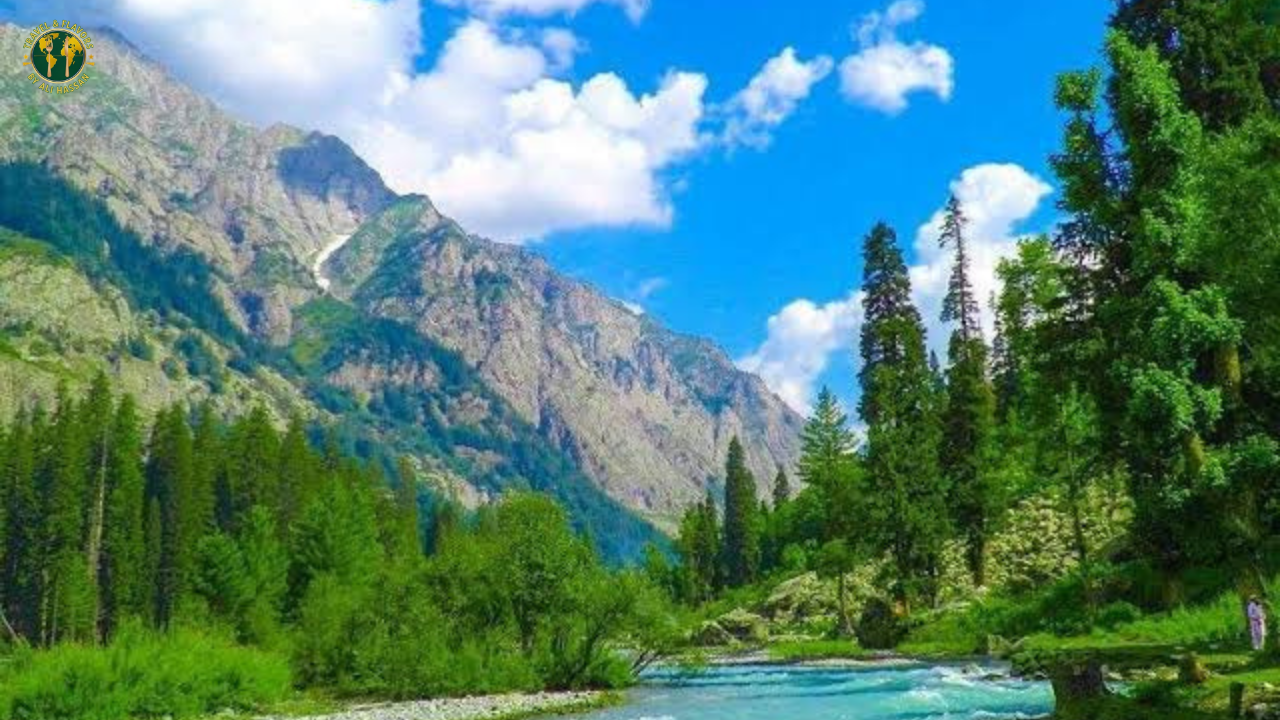
The Neelum River is visible from most of the road through this section, running a clear greenish-blue alongside the valley floor. By the time you reach Kutton, the transition from the Jhelum-influenced Muzaffarabad terrain to the more forested, narrower Neelum Valley character is complete.
Stop 2: Keran — The First LOC View (115 km from Muzaffarabad)
Keran sits at approximately 115 kilometres from Muzaffarabad and is one of the most distinctive stops in the entire Neelam Valley tour guide because of what it shows you.
The Line of Control between Pakistan and India runs along the Neelum River through this area, and at the Keran LOC viewpoint you can see both sides of the river simultaneously — the Pakistani territory you are standing in and the Indian-administered territory across the water, with both countries’ flags visible. The distance across the river at some points is narrow enough that you could shout across it. This visual is not dramatized in most tour guides because it does not fit neatly into a “scenic beauty of Kashmir” narrative, but it is one of the most geopolitically striking natural landscapes in South Asia.
The Neelum River at Keran is particularly beautiful. The clear water running over white stones against the backdrop of forested mountains has a quality that many visitors describe as the most scenic stretch of the river they saw in the entire valley.
Keran has hotel accommodation and guesthouses, with the riverside hotels being the most popular. Keran Resort is one of the better-known options with riverside views. This is a common first-night stop for tour groups coming from Islamabad.
The food at Keran’s local dhabas is where the Neelam Valley food experience properly begins. Fresh Neelum River trout, grilled or fried to order, is available here and throughout the valley. The trout from this river is consistently cited by visitors as better than anything available in fish restaurants in Islamabad — the clarity and temperature of the glacial-fed water produces a fish with firm flesh and a clean flavor that farm-raised trout cannot replicate. Order it simply grilled with lemon and local bread, without heavy sauce, to taste what the river actually produces.
Stop 3: Sharda — History in a Mountain Town (155 km from Muzaffarabad)
Sharda is one of the most historically significant stops in the Neelam Valley and simultaneously one of the most under-explained in standard tour guides. Most itineraries give it a night’s stay and mention the ruins briefly. The reality deserves more.
The Sharda Peeth ruins — the remains of an ancient Hindu temple and university complex that functioned as one of the great centers of Sanskrit scholarship in the Indian subcontinent between approximately the 6th and 12th centuries CE — sit above the town on a rocky hillside. The Sharda script, an ancient writing system used throughout the Kashmir and Punjab regions and ancestral to many Devanagari-derived scripts, takes its name from this site. Sharda was, in its prime, a place of learning that attracted scholars from across the subcontinent, the Oxford or Nalanda of its day in the northwest.
What remains today is a partial structure in various states of preservation. The Pakistani government and academic institutions have done some conservation work, but the ruins do not have the interpretive infrastructure of better-developed heritage sites. A visit without knowing the historical context risks walking past some of the most significant ancient ruins in Azad Kashmir without understanding what you are looking at. Read about Sharda Peeth before you arrive.
The town of Sharda has grown significantly as a tourist destination. There are multiple guesthouses, the Sharda Highland Resort is a frequently recommended option for families, and the Valley Trekker lodge caters to trekkers heading toward the higher lakes. The bazaar has provisions for restocking supplies before heading further north.
The river at Sharda is particularly accessible for fishing. Trout fishing permits are available locally, and the section of the Neelum River near Sharda is among the more productive stretches for brown trout in the entire valley. Bring a permit, bring patience, and do not expect the local guides to share their specific spots easily.
Stop 4: Kel — The Crossroads of Upper Neelam (180 km from Muzaffarabad)
Kel is the last town of any significant size before the valley splits and the road becomes genuinely demanding. It functions as the supply depot, accommodation hub, and decision point for upper Neelam Valley travel. From Kel, two routes diverge: one toward Arang Kel by chairlift, and one toward Taobat by jeep track.
The approach from Sharda to Kel covers about 25 kilometres on a road that is paved in sections and broken in others. A regular car can manage this stretch with care, but it begins to give you a preview of what lies ahead toward Taobat.
Kel itself is a small but well-supplied town. Hotels include PTDC Motel Kel, which is reliably clean and a popular base for families exploring both Arang Kel and the Taobat direction. The local market has provisions, pharmacies, and mobile recharge points — importantly, this is the last reliable place for mobile network signal before signal becomes intermittent toward Taobat.
The Kel food scene is worth noting specifically. The dhabas around Kel’s market area serve the best accessible Kashmiri local food in the upper valley, simply because Kel has enough regular visitors and passing traffic to keep kitchens active throughout the day. The makai roti (cornbread) paired with haakh (collard greens cooked in mustard oil with green chilli) is the Kashmiri everyday meal that most tourists miss because they order the generic Pakistani menu at hotel restaurants. Ask specifically for haakh and makai roti at the local dhabas. The combination is simple, deeply local, and completely unlike the food available in Islamabad’s Kashmir-themed restaurants.
Fresh trout at Kel is also more consistently available than anywhere further north, because the supply chain from the river to the kitchen is shorter and the turnover at local dhabas is higher.
The Arang Kel Extension: The Most Photogenic Stop in Neelam Valley
From Kel, the trip to Arang Kel is a 10-minute chairlift ride followed by a 20 to 30-minute walk to the meadow above. The chairlift system (locally called cable car) lifts you from the valley floor at Kel across the Neelum River to the opposite hillside, from which the trail continues upward through forest to the Arang Kel meadow at approximately 2,551 metres above sea level.
Arang Kel is a green meadow village perched on a hillside above the Neelum River, with wooden houses, terraced fields, and views in every direction that include the valley below, the river, and surrounding peaks. It is the most photographed single location in Neelam Valley for good reason: the combination of the meadow, the traditional wooden architecture, and the mountain backdrop produces a composition that every visitor to Neelam Valley goes home with on their phone.
The experience of Arang Kel is at its best in the morning before the day-trippers from Kel arrive. Staying overnight in one of the guesthouses in Arang Kel gives you the meadow in the evening light and the early morning mist that the daytime photograph simply cannot replicate. The temperature drops significantly at night here, and the star visibility from Arang Kel on a clear night is excellent.
Accommodation in Arang Kel is basic — wooden guesthouses and some camping arrangements. The food is limited to what the guesthouses cook: daal, rice, chapati, eggs, and tea. This is entirely fine for a one-night stay and is part of the stripped-down quality of the experience.
The chairlift fee is approximately Rs. 300 to 500 per person one-way in 2026. The last chairlift of the evening typically runs at around 5pm, which limits how late day-trippers can stay.
The Ratti Gali Lake Trek: The High Point of Neelam Valley
Ratti Gali Lake is a glacial alpine lake at 3,700 metres above sea level, accessible from a base camp near the village of Dowarian, which sits between Sharda and Kel on the main valley road.
The lake is only accessible from approximately the first week of August to mid-October, when the snow that covers the approach trail has cleared sufficiently. Outside this window, the trail to the lake is under snow and the trek is not safe without specialized equipment. If your trip dates fall in June or July, Ratti Gali is not accessible and building it into the plan is a logistical error that many tour packages make by using optimistic seasonal estimates.
The access route goes: Dowarian to Ratti Gali Base Camp by jeep (45 minutes to 1 hour on a rough track), then a 30 to 40-minute hike from the base camp to the lake. The trek is graded moderate — it requires reasonable fitness but no technical climbing skills. The elevation at the lake is high enough that altitude effects (shortness of breath, mild headache) are common for visitors arriving directly from lower altitudes without acclimatization time.
The lake itself is one of the most strikingly beautiful natural features in Azad Kashmir. The water is glacially clear and reflects the surrounding snow-capped peaks and, in August, the wildflowers that cover the meadow slopes. A small tent-based vendor sets up at the lake during the accessible season, selling tea, Kashmiri kahwa, and boiled eggs — a specific detail mentioned by multiple visitors who describe the kahwa at 3,700 metres as one of those experiences that stays with you disproportionately to its simplicity.
Two nearby lakes — Hans-Raj Lake (10 kilometres away, a 4-hour trek from Ratti Gali base) and Gattian Lake (5 kilometres away via Gattian Pass) — are extensions for trekkers who want to push further. These require hiring a local guide and are significantly less visited than Ratti Gali itself.
Stop 5: Taobat — The Last Village Before the LOC
From Kel, the road to Taobat is approximately 45 kilometres that take between 3 and 5 hours. This is where the Neelam Valley tour guide experience diverges completely from anything most visitors are prepared for.
The track requires a 4×4 vehicle. Most travelers hire a jeep at Kel rather than attempting the road in a regular car, which is the correct decision. The track crosses streams, climbs steep sections where the drop on the outer edge is significant, and passes through multiple military and police checkpoints where CNIC is required and details are logged. At Halmat, one of the final checkpoints before Taobat, each group member’s CNIC must be submitted individually — one person cannot cover the group. Carry original CNICs, not photocopies.
The communities between Kel and Taobat are Dardic people who speak Shina, the same language spoken in Gilgit city and parts of Diamer. This is a genuinely different culture from the Kashmiri communities of the lower valley. The wooden architecture, the food staples, and the social customs reflect this Dardic heritage rather than the mainstream Kashmiri identity of the lower valley. The transition is gradual but noticeable over the drive, and it gives the upper valley a character that feels more Central Asian than South Asian by the time you reach Taobat.
Taobat village sits at approximately 2,100 metres at the end of the accessible road in Pakistani territory. Beyond Taobat, the Neelum River continues into the Indian-administered Gurez Valley. There is a famous waterfall at Taobat visible from the village that serves as the visual landmark of arrival for most visitors. The setting is surrounded by peaks and the forest on the slopes above gives the village a hemmed-in quality that is part of what makes it feel genuinely remote.
Accommodation at Taobat is limited. There are a few basic guesthouses and camping options but advance booking is strongly recommended, particularly in peak season. Some visitors who arrive without booking report finding nothing available on busy summer weekends. The food available at Taobat is the most basic in the valley — eggs, bread, daal, and tea. This is entirely adequate for the experience, which is not about culinary exploration but about reaching the last point.
The drive back to Kel from Taobat is the same track in reverse, which feels faster on the return because the worst sections are already familiar. Plan to reach Kel before dark — driving the Taobat track at night is not advisable.
The Local Food of Neelam Valley: What to Actually Eat
This section exists because the standard Neelam Valley tour guide content on food is borderline useless. “Try the trout and Kashmiri chai” tells you almost nothing about what actually eating in this valley involves and what makes it distinct.
Neelum River Trout is the food that defines the valley, and it deserves genuine treatment. The brown trout in the Neelum River are wild fish in a glacially fed, fast-flowing mountain river. They are found in markets and dhabas from Keran through Kel, with availability becoming more limited further north. The standard preparation at local dhabas is simple frying in minimal oil with salt, whole spices, and sometimes a tomato-green chilli coating. The flesh is firm, the flavor clean and sweet without any muddy undertone. A full trout at a dhaba costs approximately Rs. 800 to 1,500 depending on size and location. The further north you go, the more the price reflects the difficulty of the supply chain.
Kashmiri Kahwa is the drink most associated with the region in tourist literature, and unlike most food items that get mentioned without context, the kahwa of Neelam Valley actually lives up to its description. It is a green tea infused with saffron, cardamom, cinnamon, and almonds, served hot in small cups. The saffron gives it a golden color and a faintly floral sweetness that is completely absent from regular green tea. In the cold mornings of upper Neelam Valley at 2,000 metres or above, kahwa functions as both a warming drink and a calming ritual. Every guesthouse from Keran to Taobat serves it, and the quality is remarkably consistent because the ingredient list is simple and standardized.
Noon Chai (Kashmiri Pink Tea) is the daily tea of the valley’s local communities, as opposed to the kahwa which is more associated with guest hospitality and tourist-facing presentation. Noon chai is a salty, butter-enriched tea that gets its distinctive pink color from the chemical interaction between the green tea leaves, baking soda, and aeration during preparation. The first encounter with salty tea surprises almost every visitor from the Pakistani plains. By the third morning of a Neelam Valley trip, most visitors describe finding it deeply satisfying in cold mountain conditions. It is drunk with local bread (girda or kulcha) as a morning meal in local households.
Haakh and Makai Roti is the foundational Kashmiri everyday meal. Haakh is collard greens cooked in mustard oil with green chillies and a pinch of asafoetida — simple enough that the quality of the greens and the fat determine almost everything about the final flavor. Makai roti is coarse cornbread cooked on a tawa or directly over embers. Together they form the local equivalent of “dal chawal” — the combination that Kashmiri families eat daily and that tourists consistently overlook in favor of the generic Pakistani menu items available at the same restaurants. Ask for it specifically. It is usually available but not always listed.
Fresh bread from local tandoors — particularly girda, a soft round Kashmiri bread with a slight sourdough character from the natural leavening used in some households — is available at bakeries and some dhabas throughout the valley. It is eaten with butter, with haakh, with trout, or simply on its own with kahwa. The texture is different from naan or roti and the flavor reflects the slower fermentation of traditional bread-making rather than commercial yeast.
Yakhni is a slow-cooked Kashmiri meat broth similar in concept to the Chitrali shorba — lamb or goat on the bone, simmered with yogurt, fennel seeds, and whole spices into a clear, fragrant stock. It appears at family meals and at some of the better guesthouses in the valley, particularly in Sharda and Kel where the accommodation is substantial enough to have kitchens that cook traditional rather than generic tourist food. If you are staying at a guesthouse and want to eat something genuinely local rather than the standard tourist menu, asking specifically for yakhni is the right move.
Road Reality: What Kind of Vehicle You Need
This is the most practically important section of any honest Neelam Valley tour guide and most guides handle it inadequately.
Islamabad to Keran: Any regular car in good condition. The road via Murree Expressway and the AJK highway is paved and manageable. Allow 5 to 6 hours including Muzaffarabad transit.
Keran to Sharda: Paved road mostly, some rough sections. A regular car with good ground clearance is fine. 1.5 to 2 hours.
Sharda to Kel: Road is paved in sections, broken in others. A regular car can manage with careful driving and a patient driver. 1 to 1.5 hours.
Kel to Arang Kel: Chairlift and walking trail. Vehicle not required beyond Kel.
Dowarian to Ratti Gali Base Camp: Jeep track, requires 4×4. Available for hire at Sharda and Kel. Budget Rs. 3,000 to 5,000 for the jeep to base camp and back.
Kel to Taobat: 4×4 mandatory. Jeep hire at Kel costs approximately Rs. 8,000 to 12,000 round trip depending on negotiation and vehicle type. This is not optional — regular vehicles have become stuck or damaged on this track repeatedly and the remoteness makes recovery difficult.
Permits, Security and the CNIC Reality
Neelam Valley is located in Azad Kashmir and requires no special permit for Pakistani nationals beyond their standard CNIC. For foreign tourists, a No Objection Certificate (NOC) from the Azad Kashmir government is required in addition to a Pakistani visa. The NOC process takes several working days and must be arranged before travel — it is not obtainable at the border of AJK.
Security checkpoints are present throughout the valley, with more frequent stops from Sharda onward and the most thorough registration requirement at Halmat before Taobat. At each checkpoint, travelers must provide CNIC details that are logged. This is standard procedure and is carried out courteously in practice. Have your CNIC immediately accessible rather than buried in a bag.
The Pakistan Army maintains a strong presence throughout the valley due to its proximity to the LOC. This is a security feature for tourists, not a concern. Multiple travelers describe interactions with army personnel along the route as friendly and helpful.
Best Time to Visit Neelam Valley in 2026
March to May (post-Eid and spring): The valley is intensely green from snowmelt, the Neelum River is at its fullest and most dramatic, and the wildflowers on lower slopes are beginning. Crowds are manageable outside Eid periods. The road to Taobat is beginning to clear but the upper sections may still have snow. Ratti Gali Lake is not yet accessible.
June and July (peak summer): Best weather for the main valley and for trekking. Hotels fill fast, particularly on weekends. Book accommodation at least 3 to 4 weeks in advance. Ratti Gali Lake typically opens in early August, so June-July visitors miss it. Traffic on the main Neelum road gets heavy on summer weekends.
August and September: Ratti Gali Lake accessible (from early August). Slightly cooler than peak summer. Crowds begin thinning after mid-August. September is the hidden gem month: <cite index=”35-1″>the tourist crowds thin out, the valley turns golden with autumn colour, temperatures are crisp and the light is extraordinary.</cite> This is the honest best month for Neelam Valley if your schedule is flexible.
October: Early October is possible and beautiful with full autumn color. Late October risks early snowfall closing the Taobat track. Ratti Gali Lake access ends mid-October at the latest.
December to February: Snow covers the upper valley. The road to Kel and Taobat is closed or severely limited. Lower valley destinations like Keran and Kutton are accessible and offer a snow landscape experience that is peaceful and crowd-free. Not suitable for the full Neelam Valley tour guide itinerary.
Accommodation: What to Book and Where
Muzaffarabad: Kashmir Lodges and mid-range hotels near the main bazaar. Useful as a first or last night.
Kutton: PTDC Motel and small guesthouses. Functional overnight stop for travelers who cannot push to Keran in a day.
Keran: Keran Resort is the most established option with riverside rooms. Multiple smaller guesthouses offer more budget-friendly alternatives.
Sharda: Sharda Highland Resort (family-friendly), Valley Trekker lodges (trekker-focused), and several mid-range guesthouses. The best accommodation base for Ratti Gali Lake access.
Kel: PTDC Motel Kel is the most reliable option. Book well in advance during June to August peak season. The motel is frequently cited as clean and well-managed for a remote location.
Arang Kel: Basic wooden guesthouses in the meadow. Electricity is limited or absent. Carry a headlamp. One or two nights maximum is the usual stay.
Taobat: Extremely limited guesthouses. Advance booking is non-negotiable during peak season. Some camping options for visitors who bring their own equipment.
How Neelam Valley Connects to the Wider Pakistan Travel Picture
Neelam Valley is the eastern anchor of a Pakistan travel arc that runs from Kashmir through the Punjab foothills and up the spine of KPK and GB. Understanding how it connects to the other destinations in this arc helps with planning a longer itinerary.
The contrast between Neelam Valley’s Kashmiri food culture — trout, haakh, kahwa, noon chai — and the Chitrali Kalash food we covered in our Kalash Valley food guide is striking and illustrates how differently mountain communities in Pakistan have developed their food cultures despite similar climatic constraints.
The Skardu experience in GB offers the closest parallel to upper Neelam Valley in terms of the combination of high-altitude access difficulty, LOC proximity, and genuinely remote final destinations. Our Skardu summer vs winter comparison covers that destination’s seasonal dynamics in detail.
Fairy Meadows Pakistan and Neelam Valley’s Ratti Gali Lake are the two most comparable alpine lake and meadow experiences in Pakistan for visitors who have done one and are wondering about the other. Both require commitment to reach, both reward that commitment with landscapes that photographs undersell, and both have food situations that require realistic expectations.
The Hunza apricot season covers a different dimension of northern Pakistan travel — the cultural food calendar of Hunza’s apricot groves — that makes an interesting comparison to the seasonal fishing culture of the Neelum River and the way the valley’s own agricultural calendar shapes what you eat and when.
For travelers beginning any northern Pakistan trip in Islamabad, our guide to things to do in Islamabad covers the capital’s own food and cultural scene before the mountain roads begin.
The Lahore to Islamabad drive that most Pakistani travelers make at the start of any northern trip passes through the M2 service areas covered in our motorway dhabas guide — the last proper food infrastructure before the mountain geography takes over.
Winter travel in Northern Pakistan gives the seasonal context for how Neelam Valley’s lower accessible areas in winter compare to other northern destinations that change character entirely in the cold months.
For the broader Pakistani food culture context that makes the Kashmiri food of Neelam Valley more understandable — how the haakh and trout tradition relates to the rest of what Pakistan eats — our Pakistan hidden food gems itinerary places regional food cultures including Kashmir’s in their wider national context.
One external resource worth bookmarking for current 2026 conditions: the Azad Jammu and Kashmir Tourism Department maintains updated road condition advisories, NOC requirements for foreign visitors, and accommodation registration information that is more current than any travel blog, including this one.